

In today’s fast-paced medical world, artificial intelligence in medical education is transforming how students learn, diagnose, and prepare for their careers. From intelligent flashcards to AI-powered diagnostic apps, the best medical AI tools are enhancing learning efficiency, retention, and practical application. Whether you’re looking for free medical AI tools or premium platforms packed with features, this guide covers the best study tools for medical students leveraging AI to elevate your educational journey. With AI in healthcare becoming mainstream, medical students now have unprecedented access to tools that simulate real-world clinical decision-making, aid in exam prep, and provide personalized study plans.
Here, we review the top AI tools for medical students that combine technology with medical expertise, helping you ask AI medical questions, simulate diagnoses, and master complex concepts. Let’s explore the best AI-driven resources designed specifically to optimize medical education.
Benefits of AI Tools for Medical Students
AI tools for medical students offer a range of significant advantages that can transform how future healthcare professionals learn and apply their knowledge:
- Personalized Learning: AI algorithms analyze your strengths and weaknesses to tailor study plans, quizzes, and flashcards, making your study sessions more efficient and focused.
- Improved Retention: With spaced repetition and adaptive testing powered by AI, these tools help reinforce information at the right intervals to enhance long-term memory.
- Efficient Exam Preparation: AI-powered question banks and adaptive quizzes simulate real exam conditions and adjust difficulty dynamically to prepare you better for high-stakes tests like the USMLE.
- Clinical Decision Support: Some tools offer AI-enhanced diagnostic aids, helping students practice differential diagnosis and clinical reasoning with real-world scenarios.
- Time-saving Research: AI-enabled search functions quickly retrieve relevant medical information, saving time during rotations or when studying complex topics.
- Engaging Visual Learning: AI-supported platforms use interactive visuals, mnemonics, and storytelling to make difficult concepts more accessible and easier to remember.
- Accessibility: Many AI tools are available as mobile apps, allowing students to study anytime, anywhere, and sometimes even offline.
Top 10 AI Tools for Medical Students
-
Osmosis from Elsevier
-
UpToDate
-
VisualDx
-
Mindgrasp
-
Lecturio AI Learning Assistant
-
Sketchy
-
Picmonic
-
AMBOSS
-
BoardVitals
-
Merck Manuals
Comparison Table – AI Tools for Med Students
| Tool | Best For | Key AI Features | Typical Pricing* |
|---|---|---|---|
| Osmosis from Elsevier | Visual, structured study & spaced review | Adaptive quizzes, smart recommendations | Free basic; student subs / bundles |
| UpToDate | Clinical decision support | AI-enhanced, relevance-based search | Individual subscription (monthly / yearly) |
| VisualDx | Visual diagnosis & differential practice | Image-based AI differential suggestions | Subscription; often via institutions |
| Mindgrasp | Summarizing lectures, PDFs & videos | AI summaries, flashcards, Q&As | Free trial; monthly student plans |
| Lecturio AI Learning Assistant | Guided exam prep & tutoring | AI tutor, targeted questions, analytics | Subscription; student discounts |
| Sketchy | Long-term recall with visual stories | Personalized review based on progress | Subscription; monthly/annual plans |
| Picmonic | Fast memorization of facts & buzzwords | AI-driven content personalization | Subscription; monthly/annual plans |
| AMBOSS | All-in-one study + clinical reference | Gap analysis, smart suggestions | Monthly/annual plans with student pricing |
| BoardVitals | Exam-style, adaptive Qbank | AI-adjusted difficulty & topic focus | Exam-specific subscriptions |
| Merck Manuals | Trusted free medical reference | Smart search & topic suggestions | Free |
1. Osmosis
Review:
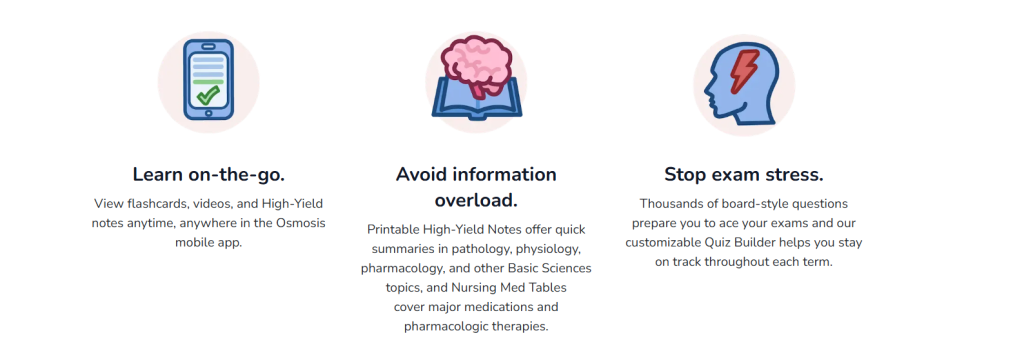
Osmosis is a comprehensive learning platform designed specifically for medical students. It harnesses AI to provide personalized study schedules, adaptive quizzes, and clear, concise video explanations. The tool is particularly praised for breaking down complex medical topics into digestible content. Its AI algorithms track student progress and suggest targeted study materials, optimizing retention and exam preparation. Additionally, Osmosis integrates visual aids, flashcards, and clinical case studies, making it a holistic learning companion for medical education.
Best for: Personalized study plans and visual learning.
Features:
- AI-powered adaptive quizzes
- Video lectures and animations
- Progress tracking with personalized recommendations
- Integration with flashcards and clinical cases
Pros:
- User-friendly interface
- Personalized learning pathways
- Comprehensive content coverage
Cons:
- Premium subscription required for full access
- Limited offline access
Pricing:
- Free basic version
- Premium: $19/month or $99/year
2. UpToDate
Review:
UpToDate is a trusted clinical decision support tool that combines an extensive medical database with AI-powered search functions. Ideal for medical students and professionals alike, it provides evidence-based answers to clinical questions quickly. Its AI enhances the search process by delivering the most relevant, up-to-date information tailored to your query. This tool is highly useful for integrating study with clinical practice, making it invaluable for students during rotations or clinical exams.
Best for: Clinical decision support and evidence-based learning.
Features:
- AI-enhanced search engine
- Comprehensive medical literature
- Regularly updated clinical guidelines
- Summaries and patient education materials
Pros:
- Reliable and authoritative content
- Useful for clinical rotations
- Mobile-friendly
Cons:
- Expensive subscription model
- Primarily clinical, less focused on exam prep
Pricing:
- Subscription-based; approximately $55/month or $499/year
3. VisualDx
Review:
VisualDx stands out as an AI-powered diagnostic clinical decision support system focusing on medical imagery. It helps students learn differential diagnosis through an extensive library of clinical images, augmented by AI suggestions based on symptoms and visual cues. This is especially beneficial for dermatology and infectious disease topics. The tool combines visual learning with AI diagnostics, aiding in pattern recognition and clinical reasoning.
Best for: Visual diagnosis and clinical pattern recognition.
Features:
- AI-assisted image diagnosis
- Large image library of diseases
- Symptom checker with differential diagnosis
- Mobile app access
Pros:
- Excellent visual learning tool
- Improves diagnostic accuracy
- Great for image-heavy specialties
Cons:
- Focused mainly on dermatology and infectious diseases
- Subscription cost may be prohibitive for some
Pricing:
- Subscription required; contact for pricing details
4. Mindgrasp
Review
Mindgrasp is an AI note-taking and comprehension tool perfect for med students drowning in lectures, PDFs, and recorded content. You upload or link your materials, and Mindgrasp generates summaries, flashcards, and practice questions, and can answer questions about the content.
Best for: Turning lectures & PDFs into usable notes and flashcards
Features
-
AI-generated summaries from lectures, PDFs, and videos
-
Automatic flashcards and quiz questions
-
Q&A chat over your uploaded content
-
Support for multi-file and long-document workflows
Pros
-
Saves huge amounts of time on note-writing
-
Great for revisiting long lectures or dense review books
-
Can quickly clarify confusing concepts from your own materials
Cons
-
Quality depends on source material clarity
-
Not a dedicated medical-only content library (you bring the content)
Pricing:
Free trial; then student-friendly monthly/annual plans.
5. Lecturio AI Learning Assistant
Review
Lecturio is a full medical learning platform with videos, Qbanks, and books. Its AI Learning Assistant works like an interactive tutor: you can ask questions, get explanations, and receive targeted follow-up questions based on your weaknesses and performance.
Best for: Guided exam prep with an AI “tutor”
Features
-
AI assistant that explains topics and asks follow-up questions
-
Integrated video library and question bank
-
Performance analytics and study plans
-
Spaced repetition flashcards
Pros
-
Great for structured, stepwise learning and review
-
AI makes it feel more like a 1:1 tutor than just a Qbank
-
Strong integration of video, questions, and flashcards
Cons
-
Subscription required for full access
-
Interface and content density can be overwhelming initially
Pricing:
Various student subscription tiers; often discounted multi-month or multi-year packages.
6. SketchyMedical (AI-supported learning platform)
Review:
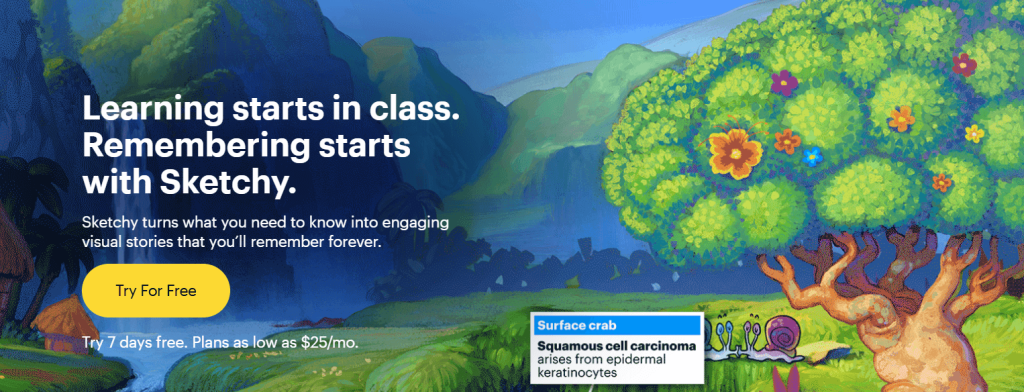
SketchyMedical combines visual mnemonics with AI support to boost memory retention in microbiology, pharmacology, and pathology. Its AI component tailors learning pathways and quizzes to reinforce weak areas. The platform’s unique storytelling approach helps medical students memorize complex information through engaging visuals and narratives, which AI personalizes for individual learning needs.
Best for: Visual mnemonics and storytelling-based learning.
Features:
- AI-driven personalized study plans
- Visual storytelling mnemonics
- Quiz and practice modules
- Integration with multiple medical subjects
Pros:
- Engaging and memorable learning method
- AI adapts to knowledge gaps
- Covers multiple core subjects
Cons:
- Requires subscription
- Less focus on clinical application
Pricing:
- $99/month or discounted annual plans available
7. Picmonic
Review:
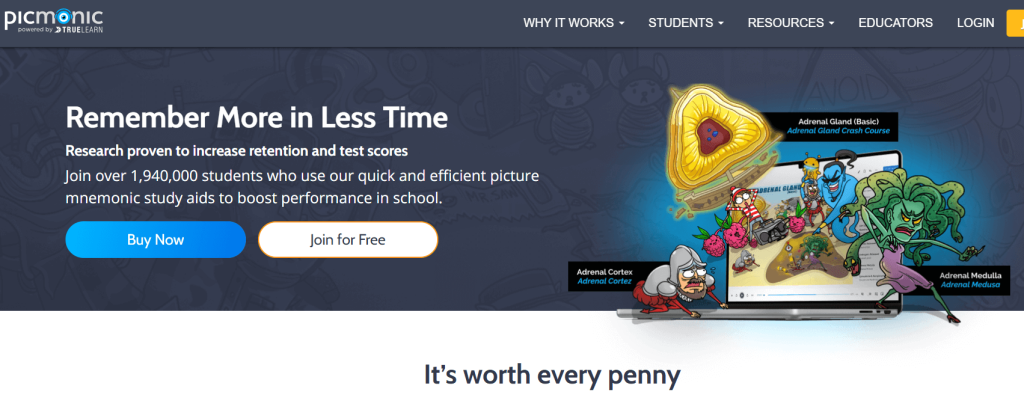
Picmonic uses AI-enhanced visual mnemonics to help medical students learn faster and remember better. It incorporates gamification elements to make studying fun and interactive. AI tracks user performance and suggests personalized content to strengthen weaker topics. Picmonic is praised for its easy-to-understand graphics and concise explanations, making it ideal for quick study sessions.
Best for: Fast memorization using visual mnemonics.
Features:
- AI-driven personalized content
- Visual mnemonic library
- Gamified quizzes and challenges
- Mobile app support
Pros:
- Engaging and interactive
- Improves recall speed
- Easy to use
Cons:
- Subscription required
- Limited depth for advanced learners
Pricing:
- Around $15/month or $150/year
8. AMBOSS
Review:
AMBOSS is an all-in-one medical learning platform offering an AI-powered knowledge library, question bank, and clinical decision tools. Its AI assists in pinpointing knowledge gaps and suggesting relevant content. The platform’s integration of up-to-date medical information with adaptive learning makes it a favorite among medical students for exam prep and clinical knowledge.
Best for: Comprehensive study and clinical knowledge support.
Features:
- AI-driven knowledge gap analysis
- Extensive question bank with explanations
- Clinical decision support tools
- Mobile and offline modes
Pros:
- Broad content coverage
- Intuitive user interface
- Helpful for exam prep and clinical rotations
Cons:
- Paid subscription needed for full access
- Some features may overwhelm new users
Pricing:
- Monthly subscription: $29.99
- Annual plans available at discounts
9. Qbank by BoardVitals (AI-driven adaptive learning)
Review:
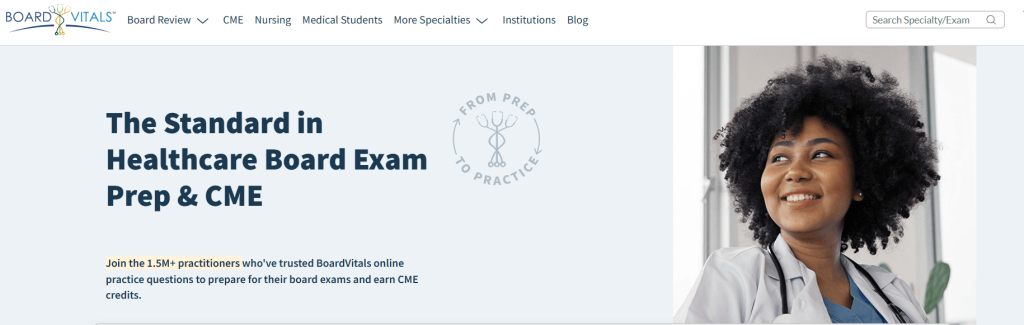
BoardVitals Qbank uses AI to adapt question difficulty and topic focus based on student performance, ensuring efficient and targeted exam preparation. The platform includes detailed explanations and references, helping students understand concepts rather than just memorize. Its AI-driven analytics track progress and highlight weaknesses for continuous improvement.
Best for: Adaptive question banks and exam readiness.
Features:
- AI-adaptive question difficulty
- Performance tracking and analytics
- Detailed explanations and references
- Exam-style timed tests
Pros:
- Highly adaptive and personalized
- Good for Step exams and specialty boards
- Comprehensive question bank
Cons:
- Subscription required
- Interface can be less intuitive than competitors
Pricing:
- $199/year for medical student plans
10. Merck Manuals
Review:
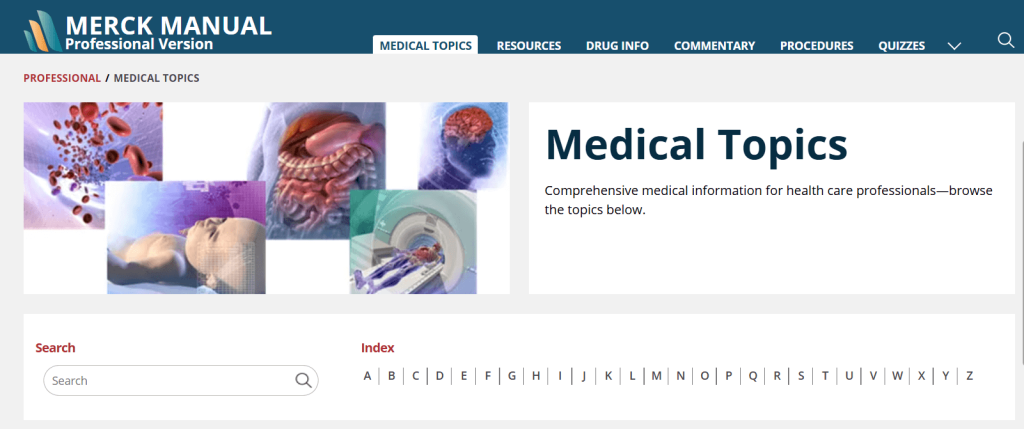
Merck Manuals offers an AI-enhanced digital medical reference widely used by students and professionals. Its AI-powered search and diagnostic tools provide quick access to evidence-based medical information. While less focused on study plans or quizzes, its authoritative content and practical approach make it a valuable reference for understanding diseases and treatments.
Best for: Medical reference and clinical information.
Features:
- AI-powered search functionality
- Extensive medical topics coverage
- Diagnostic and treatment guidelines
- Free access
Pros:
- Trusted, comprehensive resource
- Free and accessible
- Useful for clinical learning
Cons:
- Not a structured learning platform
- Lacks adaptive study features
Pricing:
- Free
How to Choose the Best AI Tool for Medical Students
Choosing the right AI tool depends on your individual learning style, study needs, and budget. Consider these factors:
- Learning Goals: Do you need help with memorization, clinical decision-making, or exam prep? Tools like Anki and Picmonic are great for memorization, while UpToDate and VisualDx aid clinical reasoning.
- AI Features: Look for adaptive learning, personalized study plans, or AI-enhanced search to get the most relevant content tailored to your needs.
- Budget: Some tools offer free versions or affordable plans, while others require expensive subscriptions. Evaluate what fits your budget.
- Ease of Use: Some AI tools have steep learning curves (like Anki), while others offer a smoother experience (Osmosis, AMBOSS).
- Content Coverage: Ensure the platform covers your curriculum and exam requirements comprehensively.
Conclusion
Artificial intelligence is reshaping medical education by providing personalized, efficient, and engaging learning experiences. The best AI tools for medical students empower learners with adaptive quizzes, visual mnemonics, clinical decision support, and more. Whether you’re prepping for the USMLE, mastering complex concepts, or sharpening diagnostic skills, integrating these AI-powered tools can transform your study routine. Evaluate your needs carefully, explore trial versions where possible, and choose the AI companion that will best help you excel in medical school and beyond.
FAQs
What is the best medical AI tool for exam preparation?
Tools like First Aid Q&A, AMBOSS, and BoardVitals Qbank are excellent for exam prep due to their adaptive AI quizzes and comprehensive question banks.
Are there any free AI study apps for medical students?
Yes, apps like Anki (free on most platforms) and Merck Manuals provide valuable AI-enhanced or AI-supported features at no cost.
How does AI improve medical education?
AI personalizes learning, adapts to student progress, enhances retention through spaced repetition, and simulates clinical decision-making for practical experience.
Can AI tools help with medical diagnosis training?
Yes, tools like VisualDx and UpToDate use AI to assist with differential diagnosis and clinical decision support, helping students learn diagnostic reasoning.
Is AI in medical education reliable?
Most AI tools are built on validated medical data and peer-reviewed content, but students should use them as supplements to traditional learning and clinical guidance.

