Can I use the intelligence output commercially (e.g., share in reports, with clients)?
▼
As with most enterprise intelligence-tools, you’ll need to check the licensing terms for your contract. Typically, the customer gets rights to use the data internally for their own risk-management, incident response, and reporting. If you intend to resell or embed intelligence in a product, verify with Flashpoint.
How many alerts or queries can I run per month?
▼
The public documentation does not list fixed quotas. Reviewers note that you have “RFI credits” (for “Request for Information”) which are part of the service and may require budgeting. (G2) You should ask during procurement what the limits are for your tier.
Can I customise the intelligence (e.g., focus on Bangladesh/Asia region, my industry)?
▼
Yes — one of Flashpoint’s value-propositions is that they tailor collections and data-feeds to customer requirements (industry, region, language). You should ask for a region-specific pilot or demonstration to see the relevance.
Does it integrate with existing tools (SIEM, SOAR, TIP platforms)?
▼
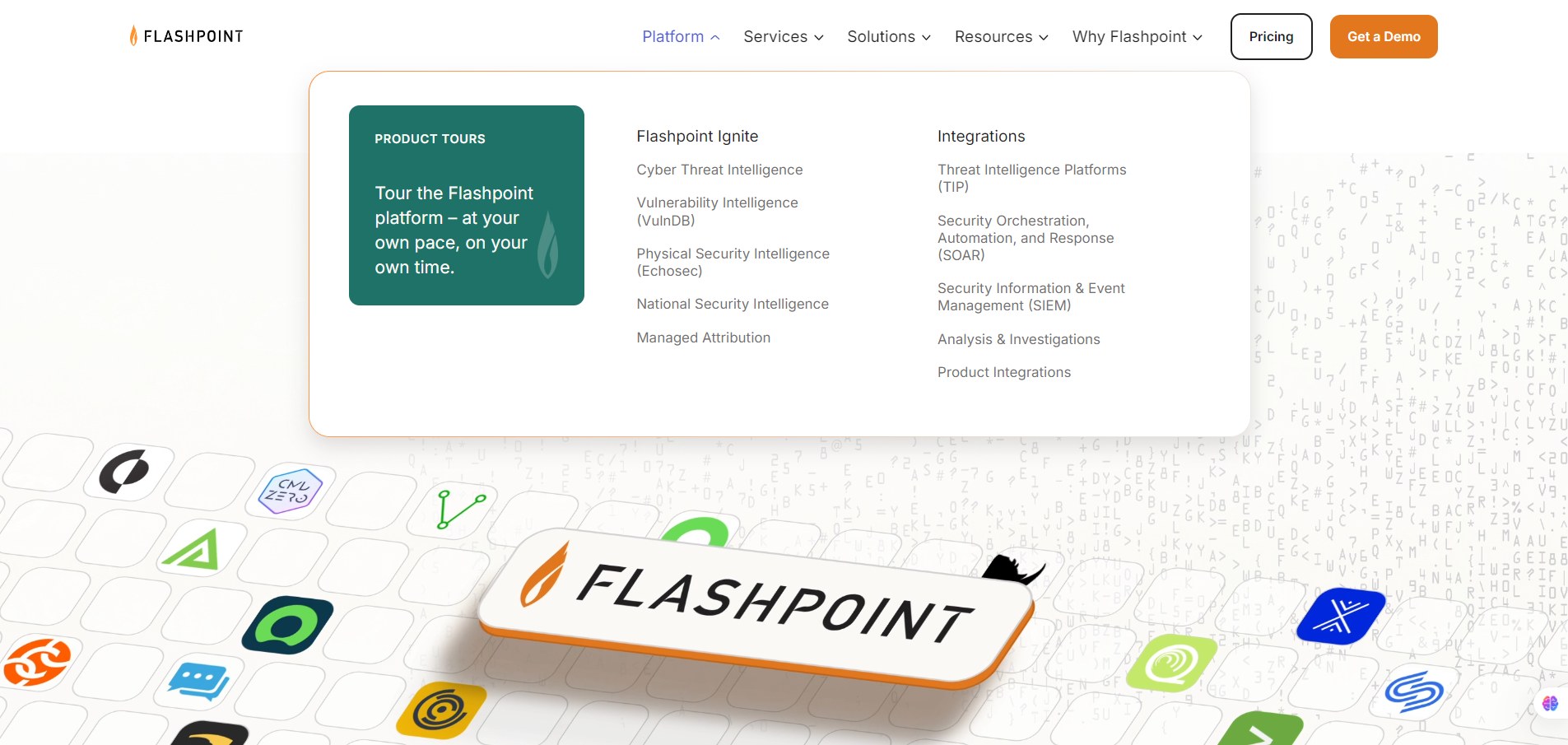
Yes — Flashpoint advertises integrations for Threat Intelligence Platforms (TIP), SOAR, SIEM and other tools. (Flashpoint) As part of your procurement, confirm the connectors they support (e.g., Splunk, SumoLogic, Microsoft Sentinel) and whether custom integration is needed.
What about data privacy / how is my data used in their models?
▼
Flashpoint’s public site emphasizes human-powered data collection and intelligence, but I did not find a fully detailed public policy on whether your internal data/triggers are used to train models. It’s wise to ask them: “Will my alerts, queries or internal data be used for training purposes or shared with others?”
What is the difference between basic and top plan?
▼
The pricing model is flexible and custom. Example: For a 0-5k employee size, Cyber Threat Intelligence might cost ~$100k/year. Additional modules (Vulnerability Intel, Physical Security) each may add $80k/year. Additional services (e.g., Managed Attribution) extra. So the difference is in modules, depth of data, integration, region/volume, service hours. You should ask for a detailed quote comparing “core” vs “premium” modules.