flashpoint_intel_logo

Flashpoint

Rating: 4.3
User Satisfaction: 90%
Flashpoint is a tool that delivers curated threat-intelligence data for security, fraud and physical-risk teams so they can identify, investigate and remediate threats across surface, deep and dark-web channels.

Overview

Flashpoint is a commercial intelligence platform for organizations that need to monitor threats, vulnerabilities, fraud-activity and physical risks using sources ranging from open web to deep and dark-web. 

If you’re a security, fraud, or risk team (in sectors like financial services, retail, healthcare, government) you often need early warning of exploited vulnerabilities, leaked credentials, dark-web chatter, threat-actor activity or physical-security risks. Flashpoint aims to provide “hard-to-reach” data (including deep/dark web) plus analyst enrichment, so you can prioritize high-impact incidents rather than chasing noise.

Details

Tool Launch / Founded Date

Founded in approximately 2010.

Best for

Security operations centres (SOC), threat intelligence teams, fraud/risk teams in mid-to large-enterprises, physical security teams, government or national-security agencies.

Access Type

Paid subscription (enterprise size). APIs/integrations available. Not a simple “freemium” product.

Licensing Model

Proprietary software. Commercial rights for customers to use the intelligence as part of their security operations. Standard enterprise-software licensing applies.

Feature

  • Provides access to data from open web and hard-to-reach deep/dark-web sources (forums, marketplaces) for threat intelligence.
  • Enrichment by human analysts + automation: not just raw data-feeds but supported intelligence.
  • Module diversity: cyber threat, vulnerability intelligence (including zero-day / exploit correlation), physical security intelligence (geolocated social media, supply-chain risk) 
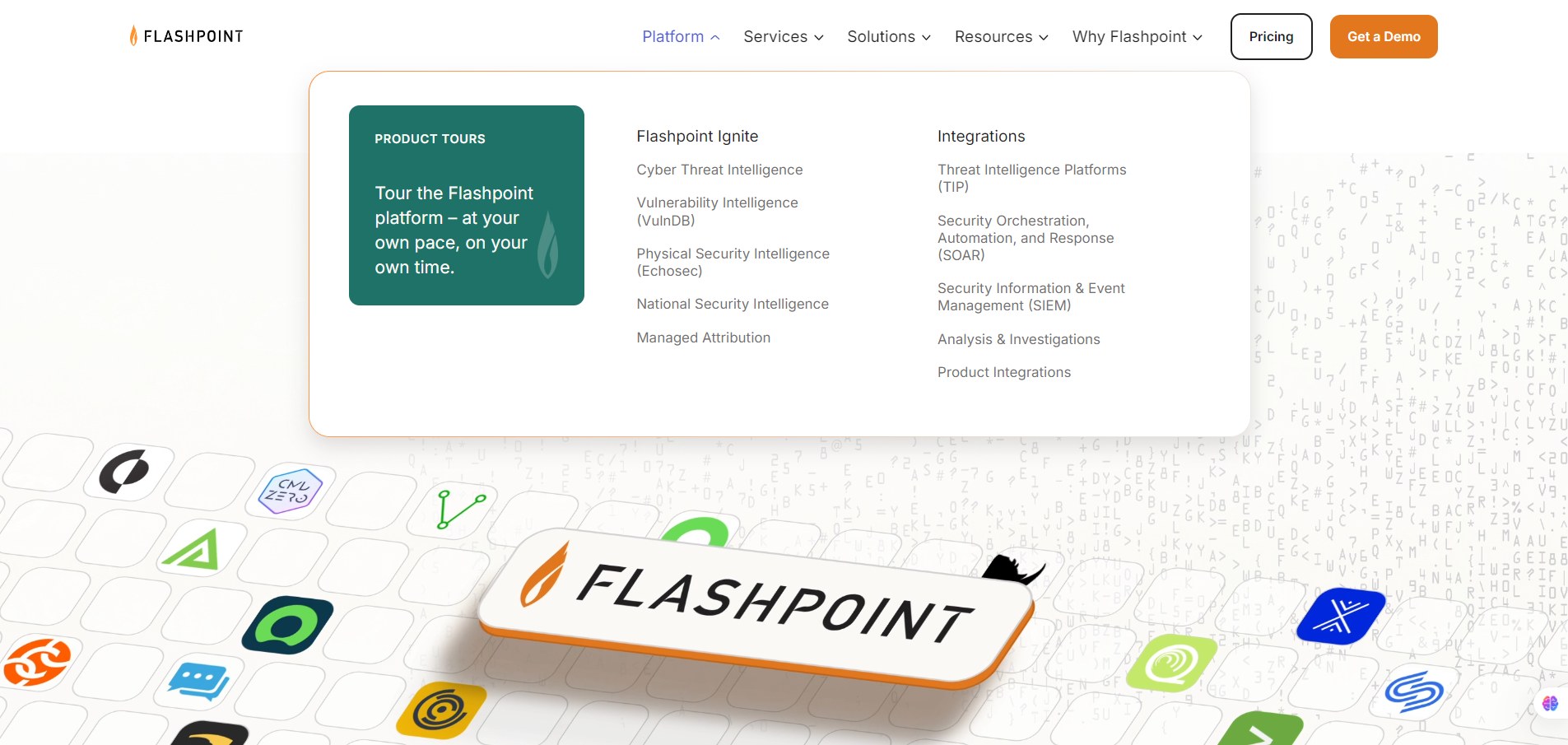
  • API / Firehose integration: you can plug intelligence into your SIEM, SOAR or other tools.
  • Industry-specific use-cases: Their website shows coverage for financial services, retail, healthcare, public sector etc.
  • Strong review feedback: Many users highlight good data-quality, fast alerts, usable platform.

Pricing Tables

Ignite Cyber Threat Intelligence
0 to 5k Employees — $100,000/year
Ignite Vulnerability Intel
0 to 5k Employees — $80,000/year
Ignite Physical Security Intel
0 to 5k Employees — $80,000/year

Analytics

Traffic Analysis

Domain Rating
74
Organic Traffic
11592
Majority Users
United States

Visits Over Time

No visit data found.

Traffic Sources

No traffic data found.

Last Update Date: 2025-11-26

FAQ

Can I use the intelligence output commercially (e.g., share in reports, with clients)?
As with most enterprise intelligence-tools, you’ll need to check the licensing terms for your contract. Typically, the customer gets rights to use the data internally for their own risk-management, incident response, and reporting. If you intend to resell or embed intelligence in a product, verify with Flashpoint.
How many alerts or queries can I run per month?
The public documentation does not list fixed quotas. Reviewers note that you have “RFI credits” (for “Request for Information”) which are part of the service and may require budgeting. (G2) You should ask during procurement what the limits are for your tier.
Can I customise the intelligence (e.g., focus on Bangladesh/Asia region, my industry)?
Yes — one of Flashpoint’s value-propositions is that they tailor collections and data-feeds to customer requirements (industry, region, language). You should ask for a region-specific pilot or demonstration to see the relevance.
Does it integrate with existing tools (SIEM, SOAR, TIP platforms)?
Yes — Flashpoint advertises integrations for Threat Intelligence Platforms (TIP), SOAR, SIEM and other tools. (Flashpoint) As part of your procurement, confirm the connectors they support (e.g., Splunk, SumoLogic, Microsoft Sentinel) and whether custom integration is needed.
What about data privacy / how is my data used in their models?
Flashpoint’s public site emphasizes human-powered data collection and intelligence, but I did not find a fully detailed public policy on whether your internal data/triggers are used to train models. It’s wise to ask them: “Will my alerts, queries or internal data be used for training purposes or shared with others?”
What is the difference between basic and top plan?
The pricing model is flexible and custom. Example: For a 0-5k employee size, Cyber Threat Intelligence might cost ~$100k/year. Additional modules (Vulnerability Intel, Physical Security) each may add $80k/year. Additional services (e.g., Managed Attribution) extra. So the difference is in modules, depth of data, integration, region/volume, service hours. You should ask for a detailed quote comparing “core” vs “premium” modules.

Related AI Tools

StoryGenerate is a tool that generates AI-written stories and plot ideas for writers and creators so they can
Newt is a tool that helps teams research, write, and organize content using AI so they can produce
Prescene is a tool that helps filmmakers and content creators plan scenes, scripts, and shot lists using AI
Jarvis AI is a tool that generates song lyrics for musicians and creators so they can quickly write
StoryBee is a tool that generates personalized stories and learning content for kids and educators so they can
ScribaMax is a tool that generates written content using AI for marketers and creators so they can produce