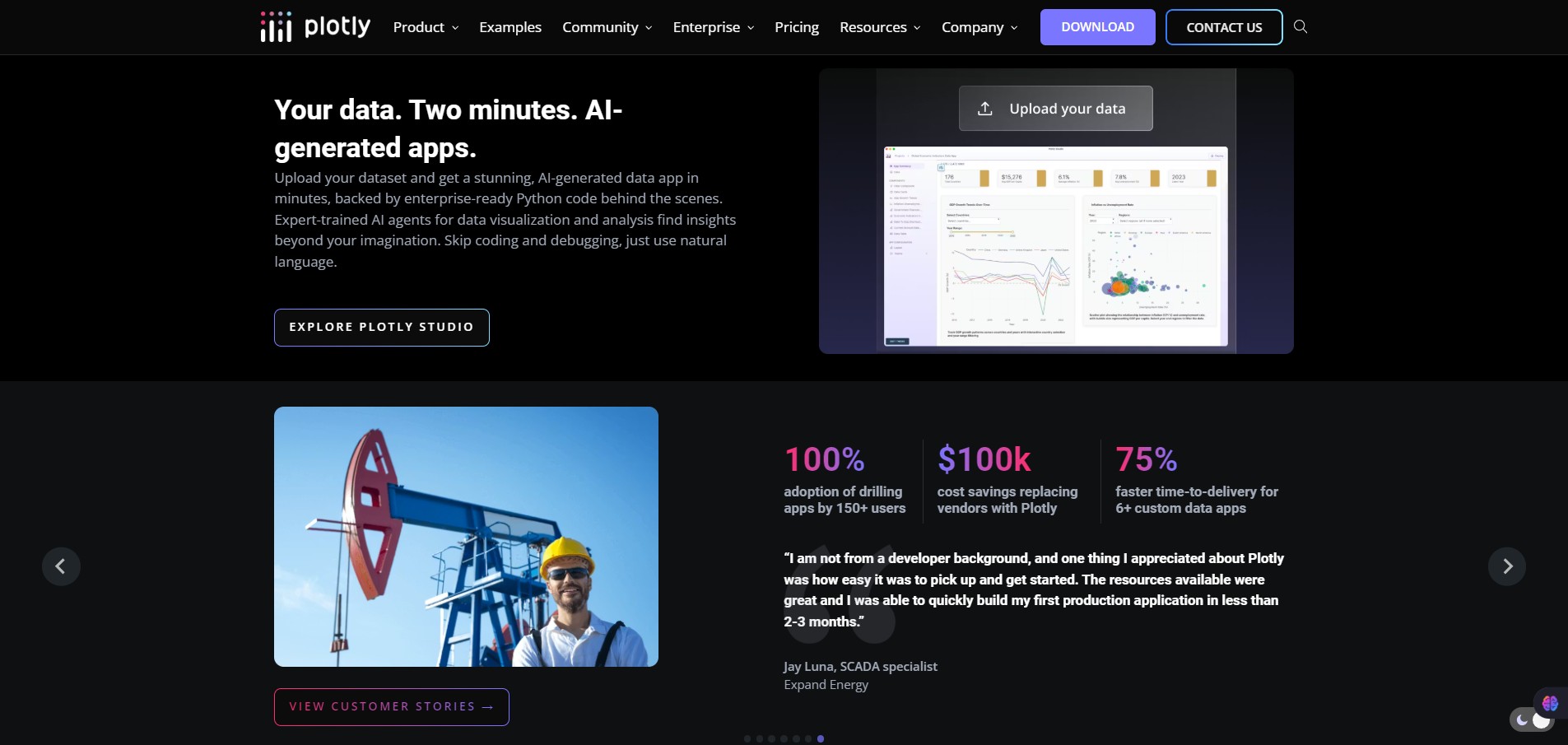
Plotly is a data visualization platform best known for its open-source graphing libraries and Dash, a framework for building interactive analytical web apps. It’s widely used by developers, data scientists, and analysts working in Python, R, and JavaScript.
At its core, Plotly lets you turn data into interactive charts—line, bar, scatter, maps, 3D plots—and embed them in notebooks, web apps, or internal dashboards.
Static charts limit exploration. Plotly makes data interactive by default—hover, zoom, filter, and drill into details without rebuilding charts. This is especially valuable for teams that want to share insights with non-technical stakeholders or build internal tools without standing up a full frontend team.
It’s a strong fit if you already work in Python or R and want production-ready visuals without switching tools.
You use Plotly libraries (Plotly.py, Plotly.js, Plotly R) to generate charts directly from code. For dashboards and apps, Dash lets you combine charts, UI controls, and callbacks into a single web app.
Dash apps can run locally, be deployed on servers, or hosted via Plotly’s enterprise offering.