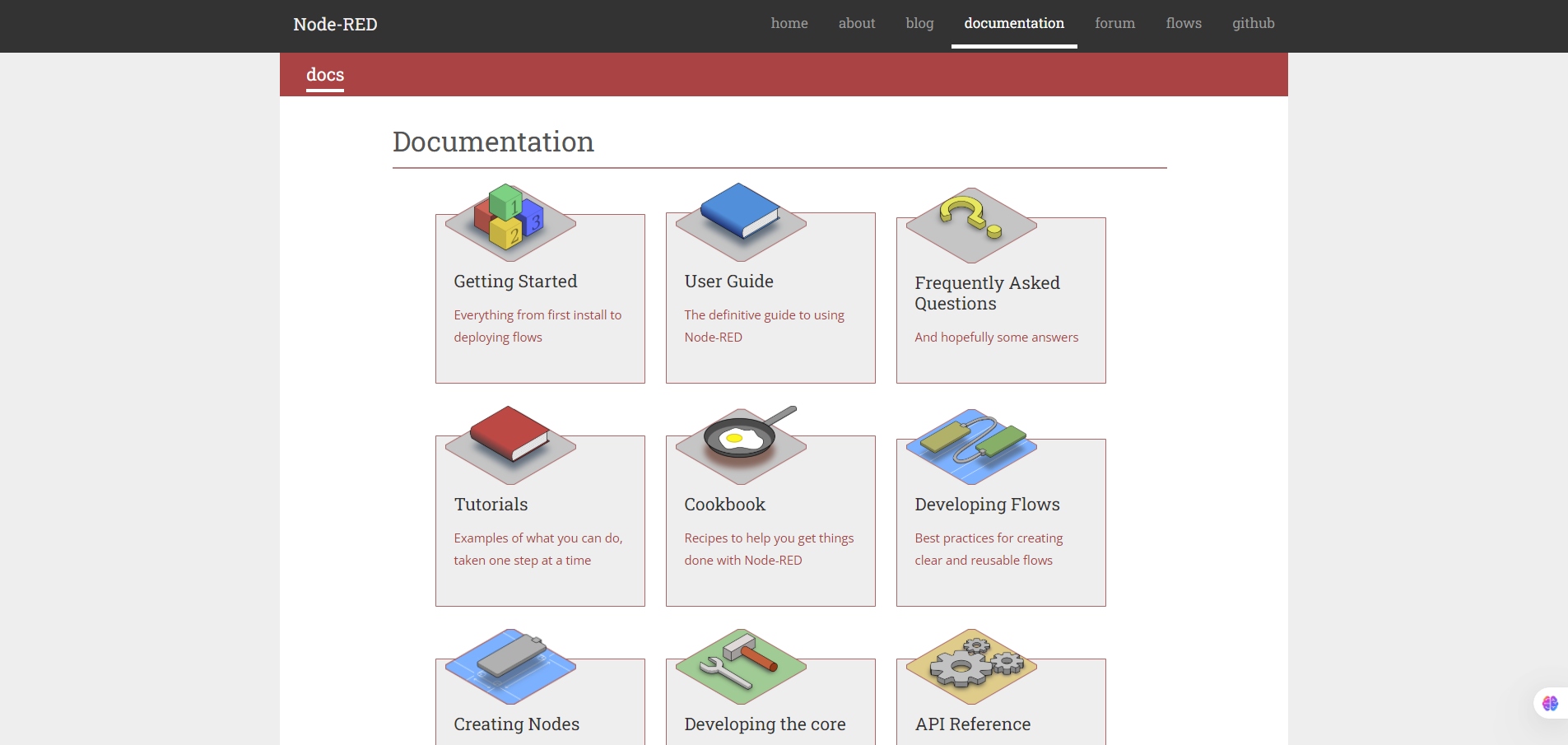
Node‑RED is an open-source, browser-based, flow-oriented development environment built on Node.js. It allows you to visually wire “nodes” (inputs, outputs, processing steps) to build event-driven applications, connect hardware, APIs, services and dashboards.
If you’re working in IoT, automation, edge computing, or need to orchestrate data flows between devices, services and dashboards — Node-RED helps you move faster without writing fully custom code from scratch. It supports rapid prototyping and integration: for example you can connect sensors, MQTT, HTTP, databases, dashboards, etc., visually. It’s especially useful for makers, DevOps/IoT teams, or operations engineers who want to build workflows with less boilerplate.
You install Node-RED (locally, on a Raspberry Pi, in a Docker container or on a cloud instance) and open its browser-based flow editor. You drag nodes from a palette, wire them together to define your flow, configure them (e.g., set topic names, APIs, transform logic), then deploy your flow with a button. Flows are stored as JSON and the runtime processes messages through the nodes at runtime.