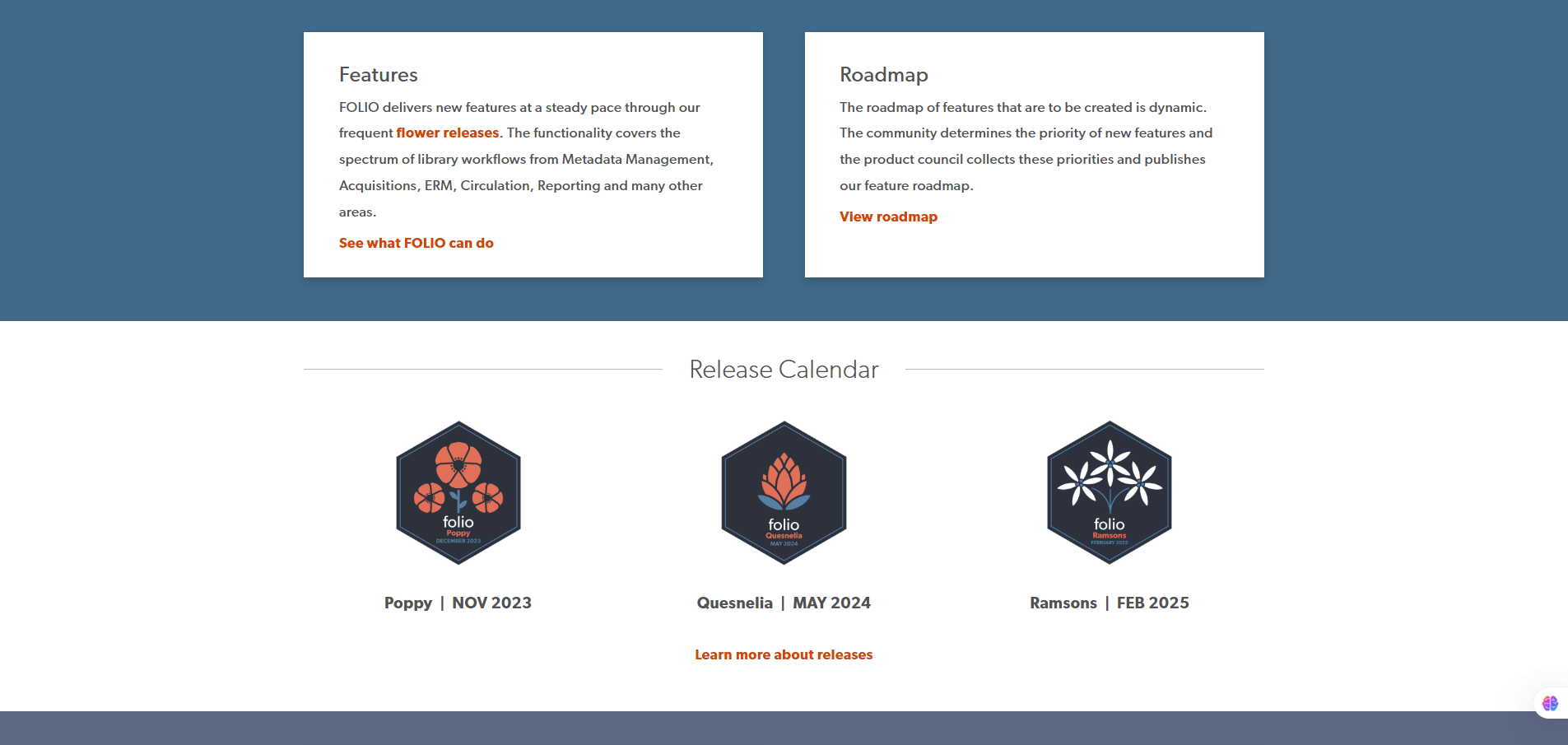
FOLIO (Future of Libraries Is Open) is an open-source, modular library services platform (LSP) designed for academic, research and public libraries. It replaces or complements traditional integrated library systems by providing a cloud-hosted (or self-hosted) platform built on APIs and modules.
Libraries face more complex workflows (electronic resources, metadata, consortia, user services) and often rely on legacy systems that are hard to extend. FOLIO enables libraries to pick and choose modules, customize workflows, and join a community driving the roadmap. This allows you to, reduce vendor lock-in by using a community-owned platform. Adapt to new library workflows (e-resources, ERM, open access). Integrate with modern tech stacks and cloud deployment from the ground up. The people who get the most value: library operations teams, library technology decision-makers, consortia, national/provincial library systems.
FOLIO is built on a modular architecture. At its core is an API gateway (called OKAPI) which proxies module APIs, tenant management, etc. UI modules are built as single-page web apps (Stripes toolkit) that run within the platform.
Libraries (tenants) install and enable the modules they need — for acquisitions, metadata, circulation, ERM, reporting. Modules can be developed by the community, vendors or library consortia. A library can host FOLIO on-premises or deploy via a hosting partner.