

Voice cloning tools have rapidly transformed how we create, replicate, and personalize voices across industries. Whether you’re building an audiobook, game character, virtual assistant, or dubbing a film, AI voice cloning software lets you synthesize realistic voices in minutes.
In this guide, we’ll review the 10 best voice cloning tools in 2025 that offer hyper-realistic, multilingual, emotional, and real-time AI voice generation capabilities. From open-source tools for developers to enterprise-ready platforms, this list covers it all.
What Is a Voice Cloning Tool?
A voice cloning tool uses artificial intelligence—specifically deep learning—to replicate a human voice. These tools analyze voice samples and create synthetic voice models that can speak new text inputs as if spoken by the original person.
Unlike standard text-to-speech (TTS), voice cloning offers personalized, expressive, and emotional voices that sound far more realistic.
Benefits of Voice Cloning Tools
- Realism: Near-human voice quality with emotional nuance
- Multilingual support: Reach global audiences
- Faster production: Generate voiceovers instantly
- Cost-efficient: Save on voice actor hiring
- Custom voice training: Build your unique brand identity
Top 10 Best Voice Cloning Tools
- ElevenLabs
- Resemble AI
- Descript (Overdub)
- Murf.ai
- iSpeech
- Voice.ai
- Coqui TTS
- Altered Studio
- Veritone MARVEL.ai
- LOVO
Comparison Table
| Tool | Best For | Free Plan | Multilingual | Real-Time Cloning | Emotional Range |
|---|---|---|---|---|---|
| ElevenLabs | Hyper-realistic voices | ✅ | ✅ | ✅ | ✅ |
| Resemble AI | Emotion-rich avatars | ✅ | ✅ | ✅ | ✅ |
| Descript | Podcasters & content creators | ✅ | ❌ | ❌ | ✅ |
| Murf.ai | Business & e-learning videos | ✅ | ✅ | ❌ | ✅ |
| iSpeech | Commercial applications | ✅ | ✅ | ❌ | ❌ |
| Voice.ai | Streamers & gamers | ✅ | ✅ | ✅ | ✅ |
| Coqui TTS | Developers & open source | ✅ | ✅ | ❌ | ✅ |
| Altered Studio | Film dubbing & localization | ❌ | ✅ | ✅ | ✅ |
| Veritone MARVEL.ai | Media & enterprise | ❌ | ✅ | ✅ | ✅ |
| LOVO | Game & VR developers | ✅ | ✅ | ✅ | ✅ |
1. ElevenLabs
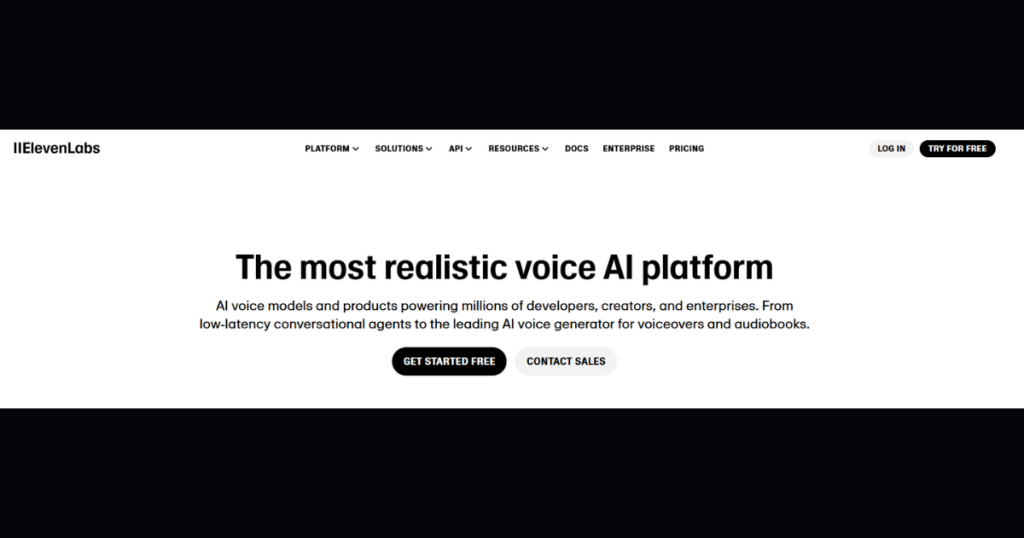
ElevenLabs is one of the most advanced voice cloning tools in the industry, offering hyper-realistic voice synthesis with just a few minutes of training data. It’s widely used in audiobooks, gaming, and content creation thanks to its expressive tone control and multilingual support.
Best for: Hyper-realistic AI voice cloning and fast deployment.
Features:
- Multilingual voice cloning
- Emotion-rich voice control
- Fast training with minimal data
- Real-time streaming API
- High-fidelity output for commercial use
Pros:
- Natural voice output
- Supports emotional variation
- Developer-friendly API
Cons:
- Limited free tier
- No open-source access
Pricing: Starts at $5/month with a free trial available.
2. Resemble AI
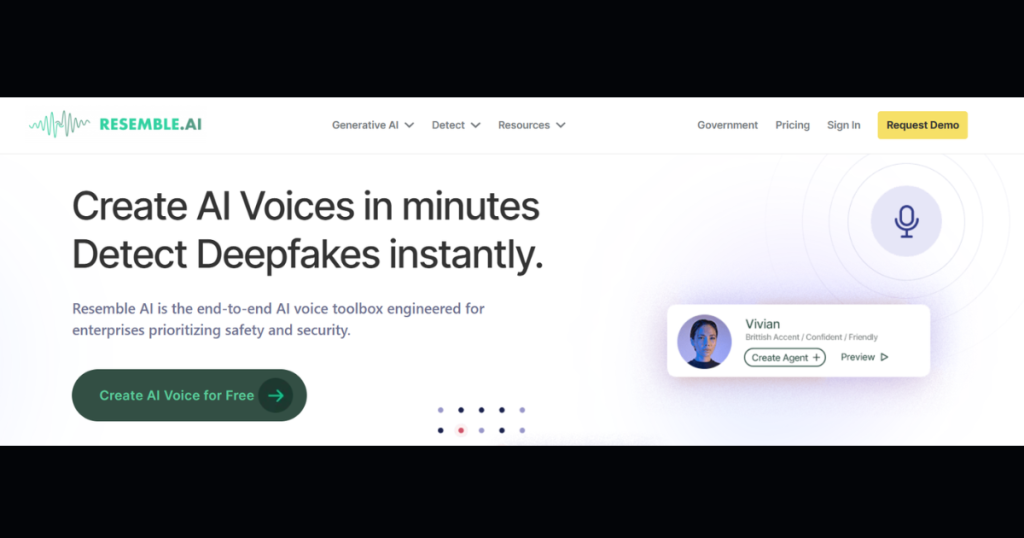
Resemble AI offers real-time voice cloning AI with emotion control and synthetic voice avatars. It’s designed for enterprises, game studios, and virtual assistants with high demand for emotional nuance and real-time synthesis.
Best for: Creating custom voice avatars with emotional depth.
Features:
- Real-time voice conversion
- Speech-to-speech cloning
- API for real-time applications
- Voice style and emotion control
- Multilingual and low-latency performance
Pros:
- Real-time synthesis
- Emotionally dynamic
- Custom voice marketplace
Cons:
- May require technical setup
- Expensive for large-scale projects
Pricing: Custom enterprise pricing; free tier available for testing.
3. Descript (Overdub)
Descript’s Overdub is the go-to AI voice cloning tool for podcasters, YouTubers, and content creators. It lets you edit audio by simply editing text and uses your cloned voice to regenerate the edited sections.
Best for: Content creators editing audio like text.
Features:
- Overdub personalized voice model
- Edit audio by editing text
- Podcast multi-track editing
- Screen recording tools
- Team collaboration support
Pros:
- Easy to use
- Seamless integration with audio editing
- Great for corrections and narration
Cons:
- Limited voice realism compared to others
- English only
Pricing: Free plan available. Paid plans start at $12/month.
4. Murf.ai
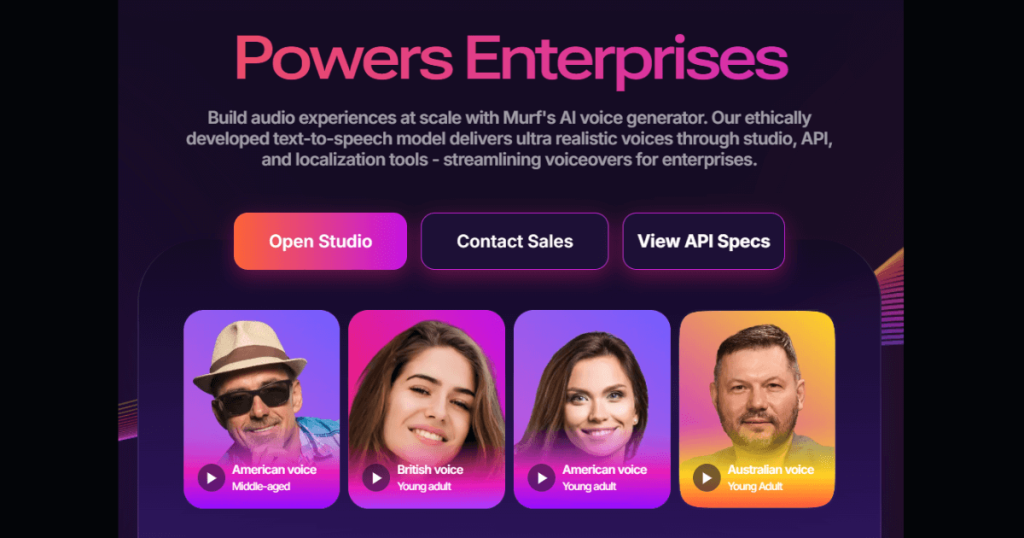
Murf.ai is tailored for e-learning, corporate presentations, and business content. With its realistic voice library and powerful editor, it’s one of the best AI voice cloning tools for professional projects.
Best for: Voiceovers for business and e-learning.
Features:
- 120+ AI voices across languages
- Emphasis, pitch, and speed control
- Voice cloning with studio-quality
- Script-to-speech editor
- Collaboration tools for teams
Pros:
- Easy drag-and-drop interface
- Multiple industry voice styles
- Affordable pricing
Cons:
- Limited real-time features
- Not ideal for developers
Pricing: Free plan available. Premium starts at $19/month.
5. iSpeech
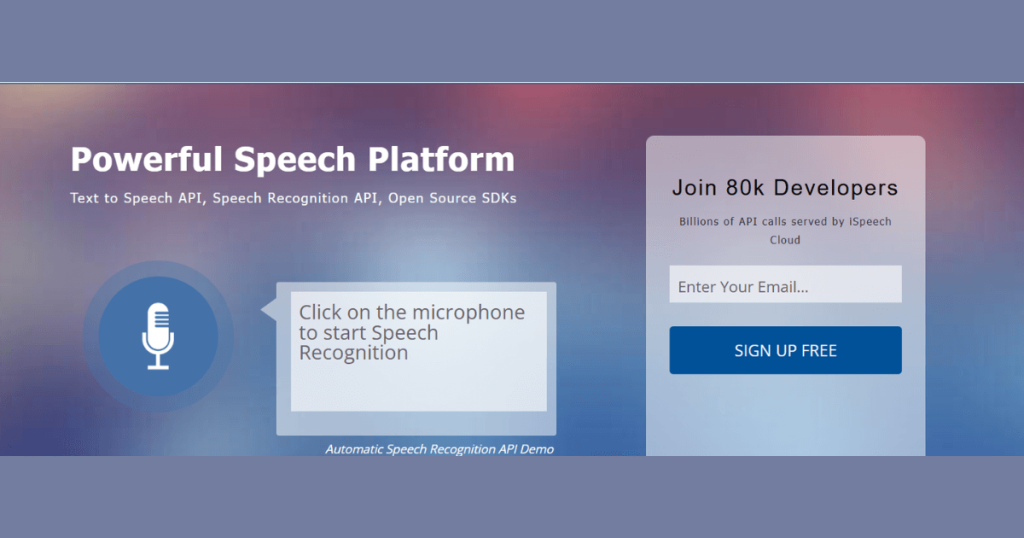
iSpeech provides commercial-grade TTS and voice cloning for apps, IVR systems, and smart devices. It focuses on scalability and quality, perfect for large-scale integrations.
Best for: App developers and commercial systems.
Features:
- Cloud TTS API
- SDK for Android/iOS
- High scalability
- Multiple language support
- Voice cloning for brands
Pros:
- Reliable infrastructure
- Developer-friendly
- Wide language support
Cons:
- Interface feels outdated
- No real-time customization
Pricing: Pay-as-you-go; custom quotes for enterprise.
6. Voice.ai
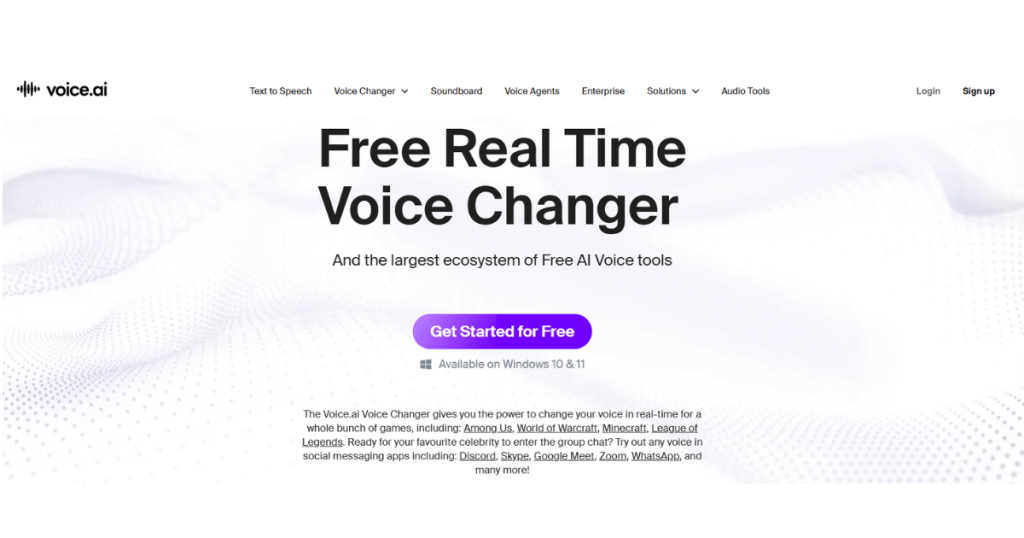
Voice.ai brings real-time voice cloning and transformation for gamers, streamers, and content creators. It’s fun, fast, and effective, with support for roleplaying and character voices.
Best for: Streamers and gamers.
Features:
- Real-time voice conversion
- Custom character voices
- Low-latency desktop app
- AI model training
- Speech enhancement tools
Pros:
- Fun and creative use cases
- Easy to set up
- Engaging community
Cons:
- Not for professional use
- Limited editing tools
Pricing: Free with premium upgrades starting at $10/month.
7. Coqui TTS (Open Source)
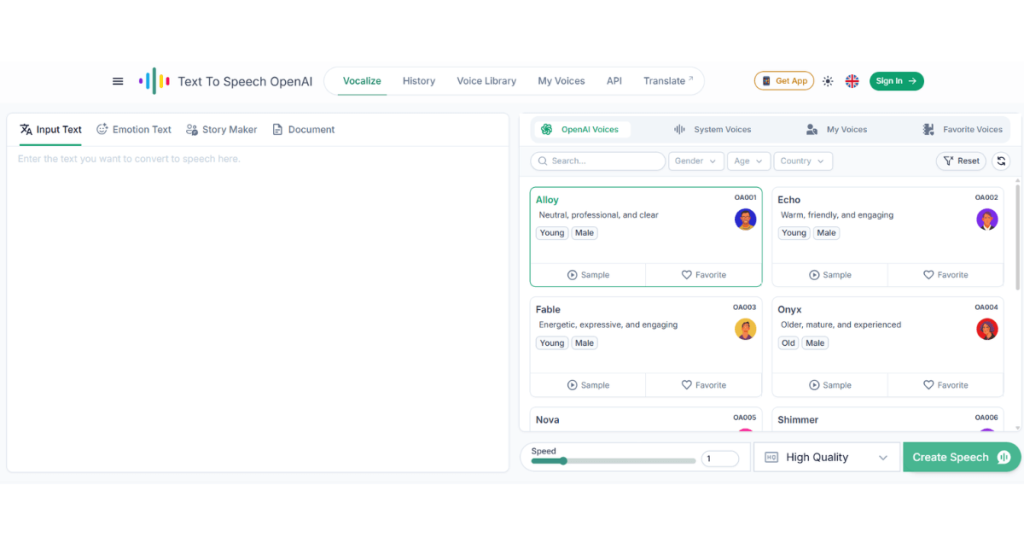
Coqui TTS is an open-source toolkit for AI voice cloning, giving developers full control over voice training and deployment. Ideal for researchers and hobbyists who want to build custom voice models.
Best for: Developers and open-source enthusiasts.
Features:
- Train your own voice models
- Local deployment
- Multilingual voice datasets
- Customizable output quality
- Open-source licensing
Pros:
- Fully free
- No cloud dependencies
- Highly customizable
Cons:
- Requires ML experience
- No UI for beginners
Pricing: Free and open-source
8. Altered Studio
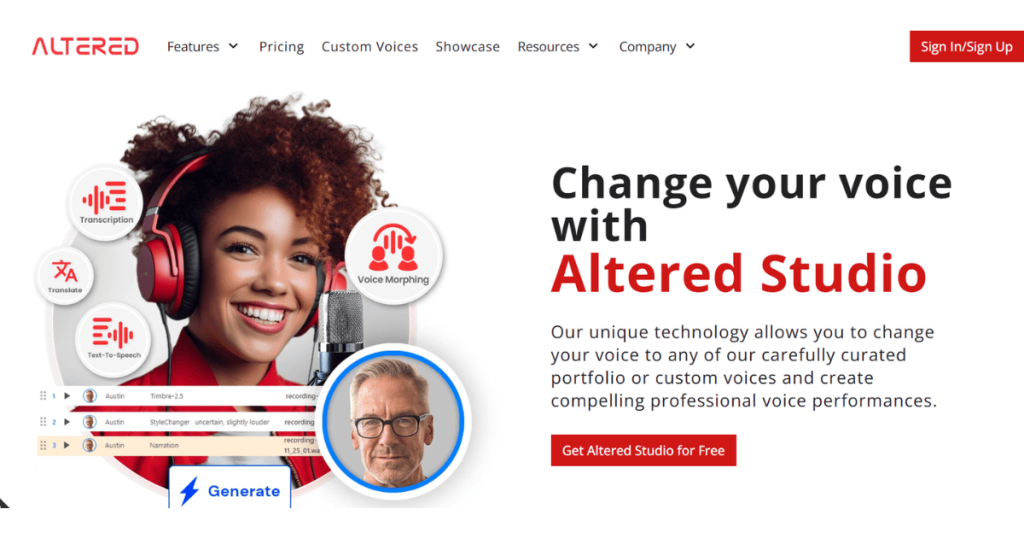
Altered Studio offers studio-grade voice transformation tools for dubbing, film localization, and media production. It helps professionals sound like someone else without losing emotional authenticity.
Best for: Film, media, and professional voice actors.
Features:
- Studio-quality voice change
- Real-time transformation
- Custom voice cloning
- Timeline-based editor
- Secure collaboration tools
Pros:
- Broadcast-level output
- High precision transformation
- Great support
Cons:
- No free version
- Geared toward professionals
Pricing: Custom pricing on request.
9. Veritone MARVEL.ai
Veritone MARVEL.ai is an AI voice cloning platform for enterprises and media brands. It focuses on secure, rights-managed voice replication with a marketplace of licensable voices.
Best for: Media licensing and secure voice cloning.
Features:
- Voice talent marketplace
- Rights management controls
- AI-generated media content
- Real-time cloning options
- Enterprise API access
Pros:
- Strong compliance features
- Enterprise-grade scalability
- Supports synthetic licensing
Cons:
- Not for individual creators
- No public pricing
Pricing: Custom enterprise pricing only
10. Loudly
Loudly is an AI music creation platform that lets creators generate, customize, and use royalty-free music for videos, social media, podcasts, games, and more. It’s designed for modern digital creators who need quick, on-brand soundtracks without dealing with copyright headaches.
Best for: Content creators, YouTubers, marketers, indie game devs, and small studios
Features:
-
AI Music Generator for instant, original tracks
-
Text-to-music prompts for mood- and style-based generation
-
Customization options (genre, mood, energy, tempo)
-
Royalty-free music library with stems and sample packs for DAWs
-
Distribution support to major platforms like Spotify, Apple Music, TikTok, and more
Pros:
-
100% royalty-free tracks suitable for commercial use (with the right plan)
-
Great for quickly generating background music for videos and ads
-
Web-based and works across devices
-
Offers music stems for deeper editing in your DAW
Cons:
-
Free plan is limited and not ideal for heavy commercial use
-
Genre selection and styles may feel limited for some advanced producers
-
Some users report a learning curve and mixed support experiences
Pricing: Starts at $10/month
How to Choose the Best Voice Cloning Tool
Choosing the best AI voice cloning tool depends on:
- Purpose: Are you dubbing a movie or streaming on Twitch?
- Real-time vs Batch: Do you need live conversion or post-production?
- Voice Quality: Look for tools with emotional and natural expression.
- Integration Needs: Consider API access or game engine compatibility.
- Budget: Some tools offer AI voice cloning tool free options, others require subscriptions.
Conclusion
Voice cloning AI is more powerful and accessible than ever. Whether you’re a solo creator, business team, or game developer, there’s a voice cloning tool tailored to your needs. From open-source freedom with Coqui TTS to real-time expressive avatars from ElevenLabs or Resemble AI, the possibilities are endless.
With these tools, you can harness the future of AI voice models, deliver lifelike audio content, and stand out in an increasingly digital world.
Frequently Asked Questions (FAQ)
What is the most realistic voice cloning tool?
ElevenLabs and Resemble AI offer some of the most natural-sounding AI voice outputs.
Are there any free AI voice cloning tools?
Yes, Coqui TTS and Voice.ai offer free options with open-source or freemium access.
Can I use AI voice cloning tools for YouTube or podcasts?
Absolutely! Tools like Descript (Overdub) and Murf.ai are perfect for content creators.
How much data do I need to clone my voice?
Most tools need just 1–5 minutes of clean audio for basic cloning.
Is AI voice cloning legal?
It is legal with consent. Always ensure you have the right to use or replicate a voice.

