


WooCommerce is a widely used e-commerce platform, especially for WordPress users, offering flexibility, scalability, and a range of features. However, it might not be the best fit for everyone, especially those seeking a more simplified or robust solution. If you’re looking for a change, there are plenty of e-commerce alternatives to WooCommerce that can help streamline your online store while meeting your business needs. In this article, we’ll dive into the top 10 best alternatives to WooCommerce, comparing their features, pricing, and performance to help you find the right platform for your online store.
Why Consider a WooCommerce Alternative?
While WooCommerce is an excellent option for many, there are several reasons why you might explore alternatives:
- Ease of Use: WooCommerce can be complex, especially for beginners, while other platforms like Shopify or Wix eCommerce are more user-friendly.
- Customization: If you need a highly customizable solution, platforms like Magento or SpreeCommerce are open-source and offer greater flexibility.
- Pricing: WooCommerce itself is free, but the costs can add up with themes, plugins, and hosting. Some alternatives offer all-in-one pricing with features included, such as Shopify and BigCommerce.
- Features: Depending on your business needs, you may need built-in features like multi-channel selling, advanced SEO, or better support for multilingual stores.
Let’s explore the top 10 alternatives to WooCommerce, and see what they bring to the table.
Top 10 Best WooCommerce Alternatives
-
Shopify
-
BigCommerce
-
osCommerce
-
Squarespace Commerce
-
Wix
-
SpreeCommerce
-
PrestaShop
-
Ecwid by Lightspeed
-
3dcart
-
Snipcart
Comparison Table of WooCommerce Alternatives
| Product | Best For | Price Range* | Key Features |
|---|---|---|---|
| Shopify | All-in-one hosted e-commerce for most store sizes | Paid plans from ~$29–$39/month | Hosted store, themes, app store, multi-channel selling |
| BigCommerce | Growing stores needing strong built-in features | Paid plans from ~$39/month | Multi-channel, no extra transaction fees, scalable |
| osCommerce | Open-source stores needing full control | Free (self-hosted) | PHP-based cart, templates, extensions |
| Squarespace Commerce | Design-driven sites that need integrated e-commerce | Paid plans from ~low $20s/month | Beautiful templates, built-in store, all-in-one hosting |
| Wix | Beginners & small businesses wanting drag-and-drop | Business plans from ~$20–$25/month | Visual builder, e-commerce tools, marketing add-ons |
| SpreeCommerce | Developer-led, custom storefronts (API-first) | Free (self-hosted) | Open-source Rails framework, headless/API-first |
| PrestaShop | International stores & marketplaces | Free (self-hosted) | Multilingual, multi-currency, large module marketplace |
| Ecwid by Lightspeed | Adding a store to existing sites & social channels | Free plan (up to 10 products), paid from ~$25/month | Embeddable cart, multi-channel, strong back-end tools |
| 3dcart | Mid-sized retailers & multi-channel sellers | Paid plans (now under Shift4Shop brand) | Built-in SEO, multi-channel, secure checkout |
| Snipcart | Developers adding a cart to custom/static sites | Free in dev; usage-based in production | JS-based embeddable cart, headless checkout |
10 Best WooCommerce Alternatives Reviews
1. Shopify

Best For: All-in-one hosted e-commerce platform – easy to use, scalable
Review:
Shopify is one of the leading hosted e-commerce platforms, ideal for businesses of all sizes. It provides an easy-to-use interface with a range of customizable themes, making it accessible for beginners and scalable for growing businesses. Shopify includes everything from web hosting to payment gateways, inventory management, and customer support. It’s one of the best WooCommerce alternatives for those who want a hassle-free experience.
Features:
-
Easy setup with drag-and-drop interface
-
Multiple payment gateways
-
24/7 customer support
-
Extensive app store for added functionality
Pros:
-
All-in-one solution
-
Scalable for businesses of any size
-
Great customer support
Cons:
-
Transaction fees on some plans
-
Limited customization compared to open-source options
Pricing:
Paid plans starting at $29/month
2. BigCommerce

Best For: Growing businesses with built-in features
Review:
BigCommerce is a powerful hosted e-commerce platform that caters to small and growing businesses. With no transaction fees and built-in features like multi-channel selling and real-time shipping calculations, BigCommerce offers an excellent value for businesses looking to scale. It’s an ideal WooCommerce alternative for merchants who need more advanced tools and integrations right out of the box.
Features:
-
Built-in multi-channel integration (eBay, Amazon, etc.)
-
No transaction fees
-
Mobile-optimized themes
Pros:
-
Great scalability
-
Advanced built-in features
-
Multi-channel integration
Cons:
-
More complex than other platforms
-
Higher pricing for smaller stores
Pricing:
Paid plans starting at $29.95/month
3. osCommerce

Best For: Tech-savvy merchants wanting a classic, fully open-source cart
Overview:
osCommerce is one of the oldest open-source e-commerce platforms. The modern versions still give you a free PHP-based shopping cart that you self-host and customize however you like.
Key Features:
-
100% open-source, PHP/MySQL stack
-
Template system and marketplace of add-ons
-
Multi-language and multi-currency support
-
Community-driven ecosystem
Pros:
-
No license fees – just hosting costs
-
Full control over code and data
-
Extensive customization possible
Cons:
-
Requires developer/technical know-how
-
UX and themes may feel more “old-school” without customization
-
Maintenance and security are your responsibility
Pricing:
Software is free; you pay for hosting, development, and any premium themes/add-ons.
4. Squarespace Commerce

Best For: Visually stunning websites with built-in e-commerce features
Review:
Squarespace offers an all-in-one platform for building beautiful websites with integrated e-commerce tools. If you prioritize design and need a simple solution for selling products online, Squarespace Commerce is an excellent choice. It’s perfect for small businesses, creatives, and artists who want to create visually stunning websites without needing advanced technical skills.
Features:
-
Drag-and-drop website builder
-
Built-in e-commerce functionality
-
Mobile-optimized designs
Pros:
-
Easy to use and beginner-friendly
-
Beautiful, professional templates
-
All-in-one solution
Cons:
-
Limited features compared to larger platforms
-
More expensive than other alternatives
Pricing:
Paid plans starting at $18/month
5. Wix eCommerce

Best For: User-friendly drag-and-drop builder with solid online store capabilities
Review:
Wix is an intuitive website builder with a strong e-commerce suite, perfect for beginners. The platform offers a drag-and-drop interface, customizable templates, and all the essential tools to run a store. Wix eCommerce is one of the best WooCommerce alternatives for smaller businesses looking to create a professional-looking online store without the complexity of self-hosted platforms.
Features:
-
Drag-and-drop builder
-
Mobile-responsive templates
-
Integrated payment solutions
Pros:
-
Extremely user-friendly
-
Affordable pricing
-
Great design options
Cons:
-
Limited scalability for large stores
-
Less flexibility compared to open-source platforms
Pricing:
Free (Basic); Paid plans starting at $23/month
6. SpreeCommerce
Best For: API-first platform for custom storefronts
Review:
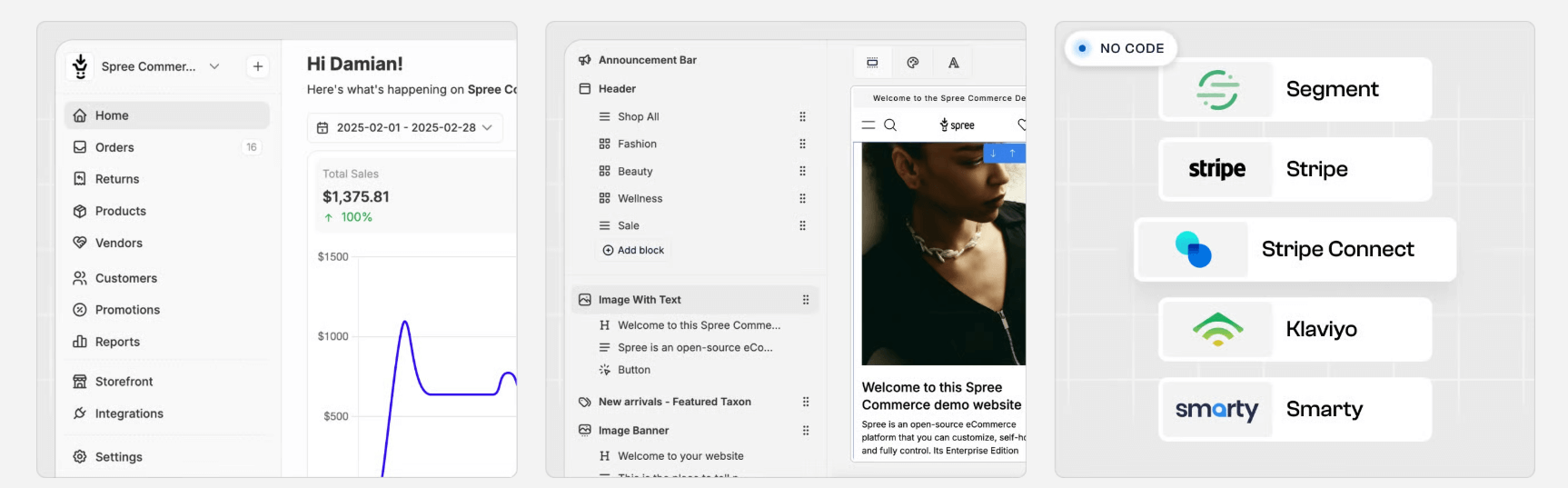
SpreeCommerce is an open-source, API-first platform that allows developers to build fully customized storefronts. It’s a highly flexible platform with extensive e-commerce features, and it’s ideal for businesses looking for a customizable solution. SpreeCommerce is one of the best WooCommerce alternatives for developers or tech teams who want full control over their store’s features.
Features:
-
API-first architecture for easy integration
-
Open-source and highly customizable
-
Multi-currency and multi-language support
Pros:
-
Full control over the design and features
-
Scalable for complex stores
-
Large developer community
Cons:
-
Requires developer expertise
-
Limited out-of-the-box features
Pricing:
Free (self-hosted)
7. PrestaShop

Best For: Free open-source platform with strong multilingual and marketplace support
Review:
PrestaShop is a free open-source e-commerce platform that’s highly customizable. It supports multilingual stores and is perfect for businesses looking to sell internationally. With over 3,000 add-ons, PrestaShop offers a wide range of functionality, making it an excellent alternative to WooCommerce for businesses needing more features.
Features:
-
Open-source and highly customizable
-
Multilingual and multi-currency support
-
Strong community and plugin support
Pros:
-
Flexible and scalable
-
Great for global e-commerce
-
Free to use (self-hosted)
Cons:
-
Requires technical setup and maintenance
-
Add-ons can be costly
Pricing:
Free (self-hosted), Paid plans for hosting and add-ons
8. Ecwid

Best For: Lightweight e-commerce solution that integrates into existing websites or blogs
Review:
Ecwid is a lightweight e-commerce solution that allows you to add a shopping cart to your existing website or blog. It’s ideal for small businesses that don’t want to set up a full-fledged e-commerce site but need to add product sales functionality to their website. With a free plan for up to 10 products, Ecwid is a great alternative for entrepreneurs just getting started.
Features:
-
Easy integration with existing websites
-
Multiple payment gateways
-
Mobile-friendly and responsive design
Pros:
-
Simple to set up and use
-
Free for small stores
-
Great for small businesses and blogs
Cons:
-
Limited features on the free plan
-
Lacks advanced customization options
Pricing:
Free (for up to 10 products), Paid plans start at $15/month
9. 3dcart
Best For: Mid-sized retailers and multi-channel sellers
Review:
3dcart is a powerful e-commerce platform with robust tools for mid-sized retailers and multi-channel sellers. It provides a variety of built-in features, such as customizable themes, product management, and SEO tools. The platform is great for sellers who want to run a comprehensive e-commerce store without needing extensive technical expertise.
Features:
-
Multi-channel selling (Amazon, eBay, etc.)
-
Built-in SEO tools
-
Customizable themes and templates
Pros:
-
Easy to use
-
Great for multi-channel retailing
-
Full-featured platform
Cons:
-
Slightly more expensive than other platforms
-
Limited customization options for advanced users
Pricing:
Paid plans starting at $19/month
10. Snipcart

Best For: Headless shopping cart solution for custom sites
Review:
Snipcart is a headless e-commerce solution that’s perfect for developers looking to add a shopping cart to custom websites. Unlike traditional platforms, Snipcart provides an API-driven shopping cart that can be integrated into any website, giving developers full control over the user experience. It’s a great option for those seeking flexibility in their e-commerce solution.
Features:
-
Headless shopping cart solution
-
API-driven for easy integration
-
Customizable checkout process
Pros:
-
Great for custom websites
-
Flexible and scalable
-
Developer-friendly
Cons:
-
Requires technical knowledge to set up
-
Lacks a traditional e-commerce platform interface
Pricing:
Free for developers, $0.30 per transaction for production use
How to Choose the Best WooCommerce Alternative
When selecting a WooCommerce alternative, consider the following:
- Business Size: If you have a large business or enterprise, Magento or BigCommerce might be the best options. For small businesses, Wix eCommerce or Ecwid might be better suited.
- Customization: If you need full control over your store’s design and functionality, SpreeCommerce and Magento are great options.
- Ease of Use: For simplicity and ease of use, Shopify and Squarespace Commerce stand out.
- Budget: PrestaShop and Ecwid offer free plans, while others like Shopify come with paid plans.
Conclusion
Choosing the right alternative to WooCommerce depends on your business needs, technical skills, and budget. Whether you’re looking for an all-in-one solution like Shopify, a highly customizable option like Magento, or a simple drag-and-drop builder like Wix eCommerce, there are plenty of alternatives available. By carefully evaluating each platform’s features, pricing, and ease of use, you can find the perfect solution for your e-commerce needs.
What is the best free alternative to WooCommerce?
PrestaShop and SpreeCommerce are excellent free alternatives offering customization and scalability.
Is Shopify better than WooCommerce?
Shopify is an all-in-one solution that’s easier to use, while WooCommerce offers more customization if you are comfortable with WordPress.
What’s the best platform for multi-channel selling?
BigCommerce and 3dcart offer robust multi-channel selling features, perfect for growing businesses.
Which alternative is best for beginners?
Wix eCommerce and Squarespace Commerce are user-friendly and ideal for beginners.
Can I use PrestaShop for international stores?
Yes, PrestaShop offers multilingual and multi-currency support, making it ideal for international sales.

