

cademic writing can be a challenging task, requiring clarity, structure, and precision. Whether you’re a student, researcher, or academic professional, the process of writing, organizing ideas, and ensuring quality can be time-consuming. Fortunately, AI tools for academic writing are transforming this process, helping writers improve the quality of their work, streamline research, and enhance productivity.
In this article, we’ll review the top 10 AI tools for academic writing, exploring their features, benefits, and pricing. Whether you need help with grammar, paraphrasing, or structuring your research paper, these tools will provide the support you need to create high-quality academic content.
What Are Academic Writing Tools?
Academic writing tools are specialized software and online platforms designed to assist with various aspects of the writing process, such as grammar checking, paraphrasing, citation management, and content generation. These tools are particularly useful for academic writers, as they help maintain clarity, consistency, and accuracy while adhering to the standards of academic writing. Some tools are powered by AI to automate tasks like generating content, suggesting improvements, or improving writing flow.
These tools help you:
- Check grammar and spelling errors.
- Improve sentence structure and writing style.
- Paraphrase and rewrite content for originality.
- Organize citations and references.
- Enhance writing efficiency and productivity.
Benefits of AI Academic Writing Tools
- Enhanced Writing Quality: AI tools help writers identify errors, improve sentence structures, and ensure their work is clear and concise.
- Time Savings: Automating tedious tasks like proofreading, citation management, and content generation allows writers to focus on more critical aspects of writing.
- Consistency and Accuracy: These tools help ensure that writing follows the correct academic tone and style.
- Improved Research: Some AI tools can assist with literature reviews by providing relevant articles and research papers.
- Plagiarism Checking: Many AI tools include plagiarism detection features to ensure originality in academic writing.
Top 10 AI Academic Writing Tools
-
Grammarly
-
Trinka
-
ProWritingAid
-
Slick Write
-
Turnitin
-
Hemingway Editor
-
Writefull
-
Literature & Latte (Scrivener)
-
SciSpace
-
Paperpal
Comparison Table: Best AI Tools for Academic Writing
| Tool | Best For | Key Strength | Free Plan |
|---|---|---|---|
| Grammarly | Everyday academic polishing | Grammar + clarity + tone suggestions | ✅ |
| Trinka | Formal academic + technical writing | Academic tone + discipline-focused checks | ✅ (limited) |
| ProWritingAid | Deep writing improvement | Reports on style, structure, readability | ✅ (limited) |
| Slick Write | Quick free proofreading | Instant grammar + style reports | ✅ |
| Turnitin | Plagiarism detection | Similarity checking (institutional standard) | ❌ (usually) |
| Hemingway Editor | Readability and clarity | Simplifying dense academic sentences | ✅ (web) |
| Writefull | Academic phrasing help | Research-style language suggestions | ✅ (limited) |
| Literature & Latte (Scrivener) | Thesis/dissertation organization | Long-form structure + notes + drafts | ❌ |
| SciSpace | Reading + understanding papers | Paper search + summaries + explanations | ✅ (limited) |
| Paperpal | Research manuscript editing | Academic language + submission-ready edits | ✅ (limited) |
1. Grammarly
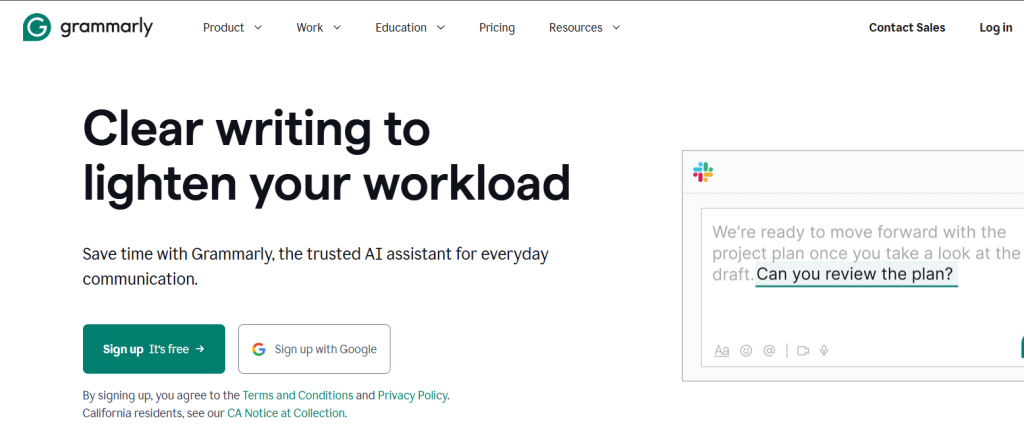
Review: Grammarly is one of the most popular AI tools for academic writing. It checks for grammar, punctuation, and spelling errors, but it also offers style suggestions to improve the clarity and tone of your writing. Grammarly’s premium version adds advanced features like a plagiarism checker, vocabulary enhancement suggestions, and genre-specific writing style checks, making it ideal for academic writing.
Best For: Grammar and style checking.
Features: Grammar check, Style guide, Plagiarism checker, Tone detector.
Pros:
- Comprehensive grammar and style checking.
- Easy-to-use interface.
- Offers plagiarism detection in the premium version.
Cons:
- Limited functionality in the free version.
- Premium version can be expensive for students.
Pricing: Free, with premium plans starting at $11.66/month.
2. Trinka
3. ProWritingAid
Review: ProWritingAid is a comprehensive writing assistant that helps with grammar checking, style improvement, and readability enhancement. It provides detailed reports on writing issues such as sentence structure, overused words, and passive voice. ProWritingAid is a great tool for academics who need a deep dive into their writing’s strengths and weaknesses.
Best For: Writing analysis and style improvement.
Features: Grammar check, Style suggestions, Writing reports, Integration with MS Word and Google Docs.
Pros:
- Provides detailed writing reports.
- Integrates with popular writing platforms.
- Affordable for the features offered.
Cons:
- Can be overwhelming with its many suggestions.
- Lacks a plagiarism checker in the basic version.
Pricing: Starts at $20/month.
4. Slick Write
Review: Slick Write is a free tool that helps you improve your academic writing by analyzing your writing for grammar issues, style suggestions, and sentence structure. It provides reports on writing habits and areas to improve, making it a great option for quick checks and fine-tuning.
Best For: Writing analysis and style checks.
Features: Grammar check, Style suggestions, Reports.
Pros:
- Completely free.
- Detailed reports on writing issues.
- Quick analysis and easy to use.
Cons:
- Limited advanced features.
- Lacks plagiarism detection.
Pricing: Free.
5. Turnitin

Review: Turnitin is a widely recognized plagiarism detection tool used by academic institutions worldwide. It compares your text to an extensive database of academic papers, articles, and other sources to check for similarities. It’s essential for ensuring originality in academic writing and is often used by universities and research organizations.
Best For: Plagiarism detection and citation management.
Features: Plagiarism checking, Citation management, Detailed similarity reports.
Pros:
- Extremely accurate plagiarism detection.
- Trusted by academic institutions.
- Integrates with learning management systems (LMS).
Cons:
- Requires a paid subscription.
- Typically only available through institutions, not directly to individuals.
Pricing: Custom pricing.
6. Hemingway Editor
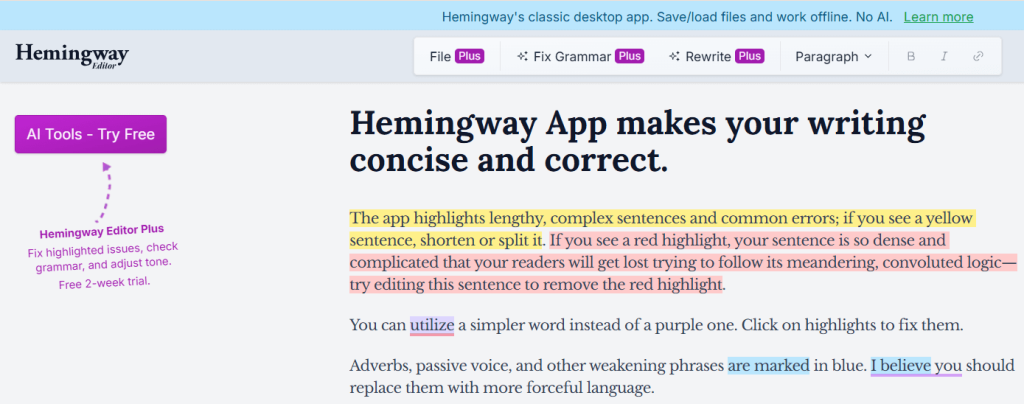
Review: The Hemingway Editor is a tool designed to make your writing clear and concise. It focuses on readability by highlighting complex sentences, passive voice, and other issues that affect clarity. This tool is perfect for simplifying complex academic writing and ensuring your ideas are presented in an easy-to-understand format.
Best For: Writing clarity and readability.
Features: Readability score, Sentence structure analysis, Style suggestions.
Pros:
- Easy to use.
- Focuses on readability and clarity.
- Offers both online and desktop versions.
Cons:
- Limited to style and readability suggestions.
- Doesn’t offer a plagiarism checker.
Pricing: Starts at $19.99 (one-time fee).
7. Writefull
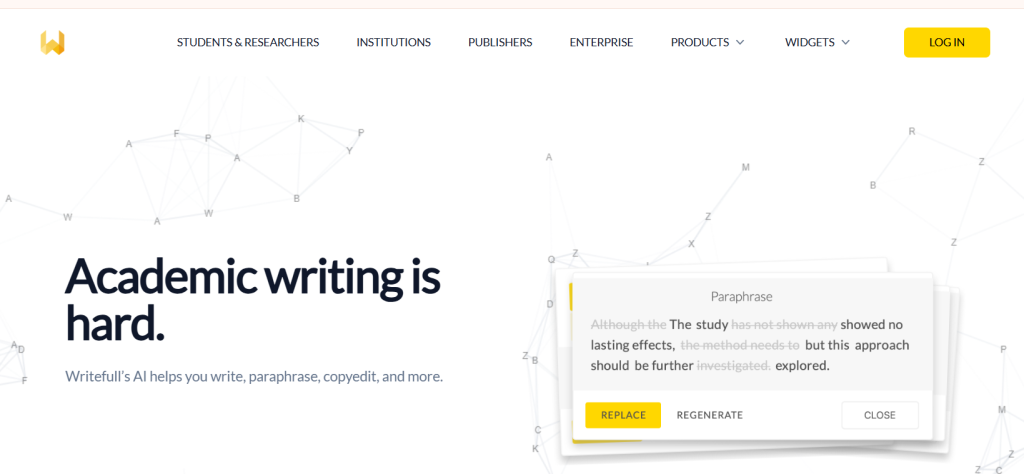
Review: Writefull is an AI-powered writing tool specifically designed for academic writers. It provides real-time writing feedback, focusing on improving language usage and structure based on academic standards. Writefull also offers suggestions for improving sentence clarity, ensuring your writing is both precise and professional.
Best For: Academic writing feedback.
Features: AI-based feedback, Academic writing tips, Sentence improvement.
Pros:
- Specifically designed for academic writing.
- Provides context-based writing feedback.
- Focuses on clarity and professional tone.
Cons:
- Limited to academic writing.
- Can be expensive for individual users.
Pricing: Starts at $12.50/month.
8. Literature & Latte (Scrivener)

9. SciSpace
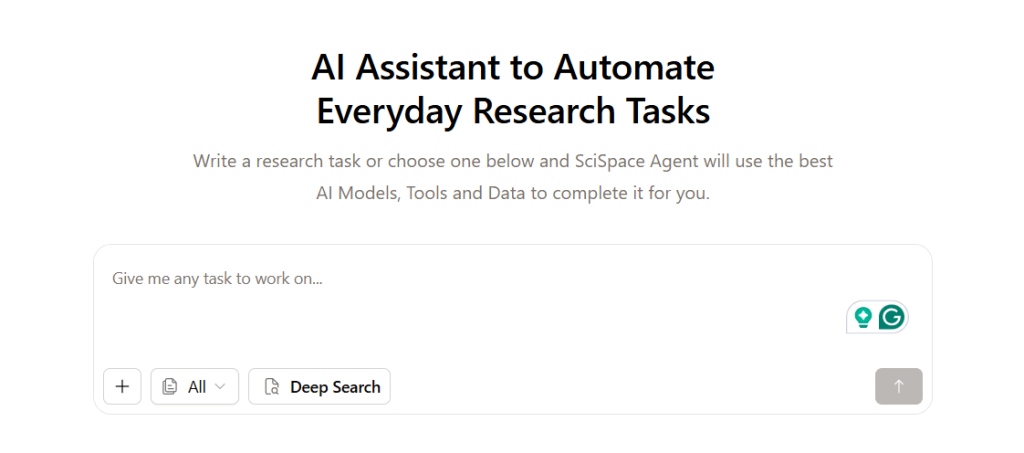
Review: SciSpace helps you discover, understand, and interact with research papers. It’s useful for literature review workflows—especially when you need quick explanations, summaries, and concept clarity.
Best For: Literature reviews and understanding research papers faster
Features:
-
Paper discovery and reading support
-
AI explanations and summaries
-
Research-focused workflow tools
Pros: -
Great for speeding up literature review
-
Helps break down complex papers
-
Useful for early research stages
Cons: -
Not a full writing editor by itself
-
Some features may be gated by plan
Pricing: Free tier may exist; paid plans vary
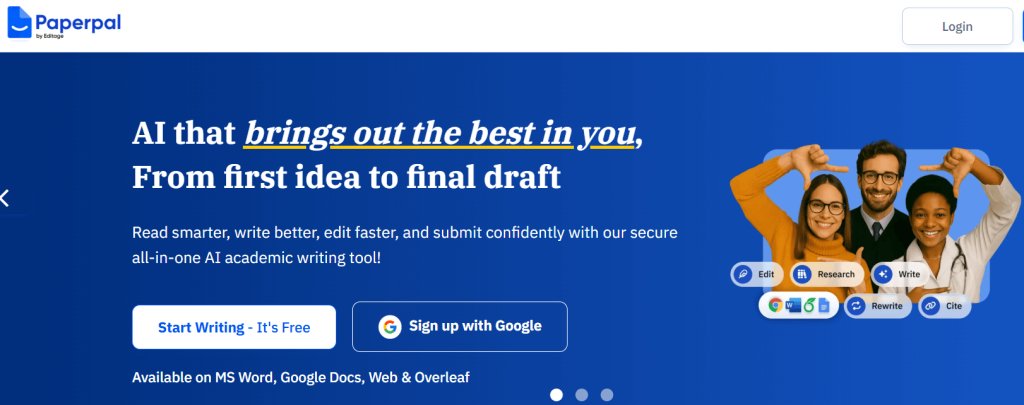
10. Paperpal
How to Choose the Best AI Academic Writing Tools
When selecting the best AI tools for academic writing, consider these factors:
- Specific Needs: Are you looking for grammar checking, citation management, or paraphrasing? Identify your primary needs before choosing.
- Ease of Use: Choose tools that are user-friendly, especially if you’re not familiar with writing software.
- Pricing: Some tools offer free versions, while others may require subscriptions. Choose according to your budget.
- Integration: Ensure that the tool integrates well with your existing writing platforms, such as Word, Google Docs, or academic databases.
Conclusion
AI tools for academic writing are transforming the way students, researchers, and academics approach the writing process. Whether you need help with grammar checking, paraphrasing, citation management, or writing structure, there’s an AI tool out there to help you streamline your workflow and improve the quality of your writing. By selecting the right tool, you can save time, enhance your academic writing skills, and produce high-quality research papers and articles.
FAQ
What are AI academic writing tools and how do they work?
AI academic writing tools use artificial intelligence to assist with tasks like grammar checking, paraphrasing, citation management, and writing structure. They automate and enhance the writing process by providing instant feedback and suggestions.
What is the best free AI tool for academic writing?
Grammarly and Mendeley are some of the best free AI tools for academic writing, offering grammar checks, citation management, and research collaboration features at no cost.
Can AI tools replace human writers for academic writing?
AI tools cannot completely replace human writers but can significantly assist with tasks like grammar checking, content generation, and citation management, enhancing the writing process.
Which AI tool is best for academic research?
Iris.ai and EndNote are excellent for academic research, helping with research discovery, literature management, and citation generation.
Are AI tools effective for academic writing in all disciplines?
Yes, AI tools are effective across various academic disciplines, helping with writing clarity, accuracy, and research management in fields ranging from humanities to science.

