


Shopify has become one of the most popular eCommerce platforms for businesses of all sizes, providing tools to build and manage online stores with ease. However, while Shopify offers robust features, its pricing can be a significant consideration for small businesses and startups. Thankfully, there are many free alternatives to Shopify that provide similar functionalities without the hefty cost. In this article, we’ll explore the top 13 free Shopify alternatives, comparing their features, benefits, drawbacks, and pricing. From open-source platforms to no-code website builders, these alternatives cater to different types of businesses, whether you’re just starting or looking for a customizable solution.
Why Consider a Shopify Alternative?
There are several reasons why you might want to explore free Shopify alternatives:
- Cost Savings: Shopify can be expensive, especially for small businesses or entrepreneurs who are just starting and don’t have large budgets.
- Customization: Some alternatives provide more customization options to help businesses tailor the platform to their specific needs.
- Free Plans and Open-Source Options: Many alternatives offer free plans or open-source solutions that give you full control over your eCommerce store.
- Simplicity: Some free alternatives are more straightforward to use, offering simpler setups or no-code platforms that are ideal for beginners.
Let’s explore the top 13 free alternatives to Shopify that you can use to build your eCommerce store.
13 Best Shopify Alternatives E-Commerce Platforms
-
WooCommerce
-
OpenCart
-
Strikingly
-
Magento Open Source
-
Big Cartel
-
Weebly
-
Dukaan
-
Sellfy
-
Shift4Shop
-
MyOnlineStore
-
Tilda Publishing
-
WordPress
-
Mozello
Comparison Table of Shopify Alternatives
| Product | Best For | Price Range | Key Features |
|---|---|---|---|
| WooCommerce | WordPress users who want full control & flexibility | Free plugin; hosting & extensions extra | Full store control, huge plugin/theme ecosystem |
| OpenCart | Self-hosted stores with built-in SEO & multi-store | Free (self-hosted) | SEO tools, extensions, multi-store, multi-currency |
| Strikingly | Simple one-page sites & very small stores | Free plan; paid from ~$8/month | Drag-and-drop builder, basic store, 1–100 products depending on plan |
| Magento Open Source | Large or complex stores needing enterprise-style control | Free (self-hosted; dev & hosting extra) | Advanced catalog, multi-store, powerful customization |
| Big Cartel | Artists, makers & micro-brands with tiny catalogs | Free for up to 5 products; paid from $9.99/month | Simple storefronts, no monthly fee on free tier |
| Weebly | Beginners who want a drag-and-drop site + basic store | Free plan; paid eCommerce from ~$10–12/month | Site builder, cart, basic SEO, integrated hosting |
| Dukaan | Mobile-first storefronts, especially in India | Free trial; paid from ~$14.99/month | Fast setup, mobile apps, COD & local payments |
| Sellfy | Creators selling digital products & subscriptions | 14-day free trial; paid from $19/month | Digital goods, subscriptions, built-in marketing |
| Shift4Shop | US merchants wanting a “free” full store via payment processing | $0/month if using Shift4 Payments; other plans paid | Full storefront, built-in SEO, templates, no software fee on Shift4 plan |
| MyOnlineStore | Small shops wanting an all-in-one hosted solution | Free “GO” plan (up to 25 products); paid plans available | Hosted store, templates, SEO tools, support |
| Tilda Publishing | Content-heavy sites that also need simple eCommerce | Free site plan; eCommerce in paid Business plan (~$15/month) | Block-based builder, landing pages, product catalog |
| WordPress | Content-first sites that can evolve into full stores | WordPress.org free; WordPress.com free plan; eCommerce on paid Commerce plan | CMS, blogging, supports plugins like WooCommerce |
| Mozello | Simple multilingual sites & small stores | Free plan (up to ~10 products); paid from $9/month | Hosted site, basic store, multilingual support |
1. WooCommerce (Free WordPress Plugin)
 Best For: Fully customizable online store with full control
Review: WooCommerce is the most popular eCommerce plugin for WordPress, offering a fully customizable online store. It’s open-source, giving you complete control over your store’s design, products, and functionality. With its extensive library of plugins and themes, you can easily extend WooCommerce’s features to meet your business needs. While the plugin is free, you’ll need to pay for WordPress hosting and possibly some premium extensions.
Features:
- Fully customizable with extensions
- Integrates with PayPal, Stripe, and other payment gateways
- Inventory management and shipping options
- Multiple themes and custom plugins
Pros:
- Free plugin for WordPress users
- Highly customizable
- Extensive library of plugins and themes
Cons:
- Requires WordPress hosting and maintenance
- Some extensions may incur additional costs
Pricing:
- Free (additional costs for hosting and premium plugins)
2. OpenCart (Free & Open Source)
 Best For: Self-hosted e-commerce with built-in SEO tools Review: OpenCart is a free and open-source eCommerce platform that offers a highly customizable solution. It’s perfect for businesses that want a self-hosted store with advanced features. OpenCart comes with built-in SEO tools, a wide range of payment gateways, and multi-language and multi-currency support, making it suitable for global businesses. Features:
- Built-in SEO tools for better rankings
- Payment gateway support for PayPal, Stripe, etc.
- Multi-language and multi-currency support
- Customizable themes and extensions
Pros:
- Open-source and free
- Easy to set up and self-hosted
- Advanced SEO features
Cons:
- Requires technical knowledge to set up and maintain
- Limited support without a paid plan
Pricing:
- Free (additional costs for hosting and extensions)
3. Strikingly

Best For: Simple one-page websites and very small product catalogs
Review:
Strikingly is a beginner-friendly website builder focused on one-page or small multi-page sites. Its free plan allows you to build a simple site and sell a limited number of products (often 1 product per site), making it suitable for testing ideas or single-product businesses.
Features:
-
Drag-and-drop website builder
-
Basic online store (product listings, checkout)
-
Mobile-responsive templates
-
Integrated blogging and simple analytics
Pros:
-
Very easy for non-technical users
-
Good for single-product or very small stores
-
Fast setup
Cons:
-
Strict product limits on free plan
-
Less suitable for larger or complex shops
Pricing:
Free plan with branding and limited products; paid plans from around $8/month (billed annually).
4. Magento Open Source (Free & Open Source)
 Best For: Enterprise-level stores needing full customization Review: Magento Open Source is a powerful eCommerce platform designed for enterprise-level businesses. It provides a full suite of customization options for product management, order management, and customer service. Magento is best suited for larger businesses with more technical resources, as it requires self-hosting and expert knowledge for setup and maintenance. Features:
- Highly customizable and scalable
- Product management and order management tools
- SEO features and marketing tools
- Mobile responsive themes
Pros:
- Free and open-source
- Excellent for large businesses and enterprise solutions
- Highly customizable and scalable
Cons:
- Requires self-hosting and technical setup
- May be overkill for smaller stores
Pricing:
- Free (requires hosting and development resources)
5. Big Cartel (Free Plan – Limited Products)
 Best For: Artists, makers, and small sellers Review: Big Cartel offers an easy-to-use platform for creators and small businesses to sell products online. The free plan allows you to list up to 5 products, making it perfect for artists, makers, and hobbyists. Big Cartel offers basic eCommerce features, inventory management, and customizable store themes, all with a very user-friendly interface. Features:
- Up to 5 products on the free plan
- Customizable store themes
- Integrated payment processing (PayPal, Stripe)
- Inventory management
Pros:
- Free plan with essential eCommerce features
- Simple and easy to use
- No transaction fees
Cons:
- Limited to 5 products on the free plan
- Lacks advanced features
Pricing:
- Free (for up to 5 products), $9.99/month for more products
6. Weebly (Free Ecommerce Plan)

Best For: Easy drag-and-drop website and store builder
Review: Weebly is a popular website builder that offers a free eCommerce plan for users to create simple online stores. It comes with drag-and-drop functionality, which makes it easy for anyone to create a website and start selling. Weebly’s free plan includes basic eCommerce features, such as inventory management, shopping cart, and payment integration.
Features:
- Drag-and-drop builder
- Mobile-responsive themes
- Inventory management
- Payment integration with PayPal and Stripe
Pros:
- Free plan with basic eCommerce features
- Easy-to-use drag-and-drop editor
- Includes basic SEO tools
Cons:
- Limited features on the free plan
- Weebly branding on free websites
Pricing:
- Free (with Weebly branding), $6/month for premium plans

 Best for: Selling digital goods like eBooks, courses, and files




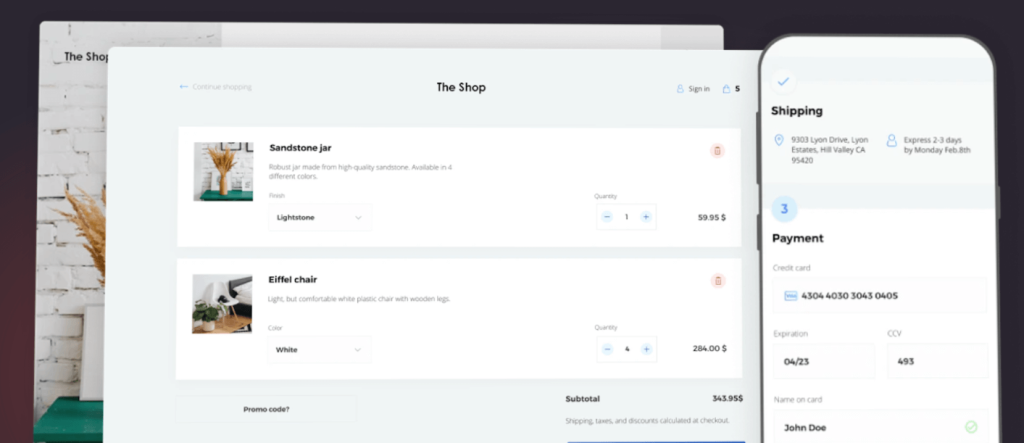
Best For: Embeddable shopping cart for HTML/CSS/JS websites
Review: Snipcart is an easy-to-use shopping cart solution designed for websites built with HTML, CSS, and JavaScript. It allows developers to integrate a full e-commerce experience into custom websites without the need for complex coding. While the platform is free for development use, you’ll need a paid plan for production-level usage. Snipcart’s flexibility and lightweight integration make it an excellent choice for developers looking for a minimalist eCommerce solution.
Features:
-
Easy integration with HTML, CSS, and JavaScript websites
-
Shopping cart and checkout functionality
-
Support for digital and physical products
-
Customizable design
Pros: -
Free for development use
-
Works with custom websites
-
Lightweight and minimalist integration
Cons: -
Requires technical knowledge for setup
-
Paid plans needed for live/production stores
Pricing: Free for development use, $0.30 per transaction for production
How to Choose the Best Shopify Alternative When selecting the best free Shopify alternative, consider these key factors:
- Features Needed: If you need advanced eCommerce tools and scalability, consider platforms like Magento or PrestaShop. If you’re looking for a simpler solution, Big Cartel or Weebly may be ideal.
- Customization: Platforms like WooCommerce and Magento offer the most customization for advanced users.
- Technical Requirements: Some platforms like OpenCart and Magento require more technical knowledge for setup and maintenance, while others like Big Cartel and Weebly are easy to use with minimal setup.
- Support and Community: Check if the platform offers adequate support and a large community to help troubleshoot issues.
- Growth Potential: Consider whether the platform can grow with your business. If you plan to scale quickly, choose a platform with strong scalability like WooCommerce or Magento.
Conclusion
Choosing the right free Shopify alternative depends on your specific needs, whether you’re looking for an easy-to-use website builder, enterprise-level customizability, or a self-hosted solution. The top 13 free alternatives to Shopify offer great options for businesses of all sizes, whether you’re just starting out or scaling up.
What is the best free alternative to Shopify?
WooCommerce is one of the best free alternatives, especially for WordPress users.
Is Shopify worth the cost?
Shopify is worth it for larger businesses with advanced needs or those who require an all-in-one platform.
Can I use WooCommerce for free?
Yes, WooCommerce is free, but you’ll need to pay for hosting and possibly some premium extensions.
What’s the easiest alternative to Shopify?
Big Cartel is the easiest alternative, especially for small businesses and artists.
Which free platform is best for digital products?
Sellfy is great for selling digital products like eBooks, courses, and files.

